
In Japan, the god of rain and the god of art are connected — they share the same deity, tied to dragons, to that whole world. So, an ameonna isn’t cursed. She’s being watched over by the god of art. The moment I heard that, something shifted in me. I stopped fighting it. Rain went from being something I was embarrassed about to something that felt almost like a sign, like I was exactly where I was supposed to be. —— SAKI
There is a Japanese word for someone who brings rain wherever they go, ameonna (雨女). A rain woman. For years, SAKI wore it like an apology. But it has changed. She wears it now as an identity. SAKI built her name from the ground up — a decade of touring and recording as lead guitarist of Mary’s Blood, then as the technical backbone of NEMOPHILA, one of the most internationally recognized heavy metal acts to emerge from Japan in recent years. She became known for her precision and speed. Recognized and loved as a guitar hero. And then she walked away at the peak of her fame. In early 2024, SAKI departed NEMOPHILA. What followed was not the clean beginning of a solo career. It was, by her own account, one of the hardest periods of her life. No management, no agency, no filter between her and the noise of the internet that was calling her names. There were moments, she recalls, where she considered not coming back at all.
She wanted to quit music.
But, she came back.
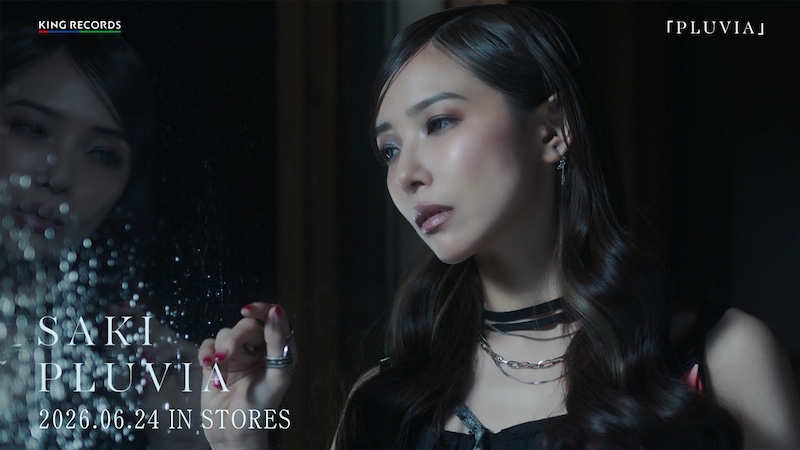
This year, SAKI released her autobiographical memoir Saki no Oto — 288 pages of self-examination, self-introspection and the childhood dream of becoming a novelist finally finding its form. And on June 24th, she releases PLUVIA on King Records — her major label solo debut, a fully instrumental solo album that features collaborations with DragonForce and Amahiru guitarist/ bassist Frédéric Leclercq and guitar legend Gus G, known for Firewind and his years alongside Ozzy Osbourne. Two guitar heroes, one album, and not a single vocalist in sight. The term pluvia is Latin for rain. A title that made sense. And in this personal interview she tells us why. The voice she lost in the chaos of 2024 has found its way back — through 10 instrumental tracks and not a single word. It turns out an ameonna isn’t cursed. She’s being watched over by the god of art.
—Hi SAKI, thank you so much for taking the time to talk with us today. How are you holding up with your major debut as a solo artist?
SAKI: I’m doing well, thank you! It has been incredibly busy, but I am very happy to finally share these projects with everyone.
—It’s an incredible milestone. Congratulations!
Looking at the album title, the tour, and how you describe yourself, there is a powerful theme connecting everything: rain. You’ve embraced the identity of an ameonna (rain woman). What does that word mean to you personally, and how does rain influence your music?
SAKI: Thank you! Well, in Japan, an ameonna — literally “rain woman” — is someone who seems to bring rain wherever they go. Outdoor events, festivals, important days — if you’re an ameonna, it rains. People use the word overseas too, actually. And for a long time, I really did feel like that was me. Rain follows me (laughs). For years it bothered me. Rain at a show means problems — soggy equipment, people getting cold, that kind of chaos. It felt like something to apologize for. But then someone told me something that completely changed how I saw it. In Japan, the god of rain and the god of art are connected — they share the same deity, tied to dragons, to that whole world. So, an ameonna isn’t cursed. She’s being watched over by the god of art. The moment I heard that, something shifted in me. I stopped fighting it. Rain went from being something I was embarrassed about to something that felt almost like a sign — like I was exactly where I was supposed to be. And then musically, I’ve always loved the sound of rain. It doesn’t have a melody, there’s no pitch to it, but it stays in your ear in this comfortable, settled way. When I sleep and I can hear rain outside, I sleep better. There’s something about it that just quiets everything. So for me, rain holds two things at once. It’s a symbol of sadness — that’s undeniable. But it’s also what makes flowers bloom. You can’t have one without the other. That tension is exactly what I wanted this album to carry.
—I didn’t know that, but it makes complete sense. It’s a beautiful perspective, and I think many people can deeply relate to that feeling of calmness and clarity that the sound of rain brings. There’s something very comforting about the sound of rain falling. Rain is also a symbol of melancholy — but flowers need rain to bloom. You’ve spoken about a period where you considered walking away from music entirely. Is PLUVIA the album of that difficult time — or is it the moment the flowers finally bloomed?
SAKI: It’s definitely the blooming. Not the storm. It’s what came after it. About two years ago I left the band. And when you leave a band, especially one you’ve been part of for a long time, there’s this period where everything feels uncertain. I didn’t have management, I didn’t have an agency — I was doing everything alone. And in that space, the comments started. Strange messages on social media, things that were genuinely hard to read. When you’re already fragile and you have no one around you filtering that noise, it gets inside you in ways it normally wouldn’t. There was a point where just thinking about my own music became painful. Not other people’s music — my own. The thing I’d always run toward started to feel like something I needed to avoid. I thought — maybe I don’t need to keep doing this. Maybe it’s okay to stop. Then the offer came. And the label said something I wasn’t expecting — make whatever you want, freely. No direction, no brief, no pressure. Just make something that’s yours. That changed everything. Because until that point, even in my solo work, there was always some invisible shape I was trying to fit. This was the first time there was genuinely nothing in the way. And what came out of that freedom — that’s PLUVIA. So no, this isn’t the album of the difficult time. That time was the rain. This album is what grew from it. PLUVIA is the flower that bloomed from that rain.
—I’m very happy to hear that — I’m glad you’re in that place now. This album involved several collaborators — including Frédéric Leclercq and Gus G. What did working with them teach you?
SAKI: Frédéric and I have been friends for a long time now — we formed Amahiru together, so there’s already a real trust there. He loves Japan deeply and comes here often, and every time we see each other he tries to teach me French. Numbers, basic phrases — and every time I completely fail to remember any of it though (laughs). He’s incredibly patient about it. He has this quality of being genuinely kind, like an older brother. Even in the beginning when he couldn’t speak Japanese and we were first getting to know each other through DragonForce, that warmth was just there. Some people you connect with beyond language. The whole atmosphere of a session lifts when he’s there. That kind of energy matters more than people realize when you’re recording — the mood in the room gets into the music.
Gus G was introduced to me by the label. He’s one of those guitarists that other guitarists look up to — a real guitar hero. So, to actually be in a studio making something together, I was genuinely thrilled. A little nervous too, honestly. What I took from both of them — and this is something I think about a lot — is this quality in their sound. It’s clean, full-bodied, it has real character. There’s something about playing with musicians from outside Japan that feels different from playing with Japanese musicians. I can’t fully put it into words, but the sound has a distinct personality — something individual that goes beyond technique. And it made me want to chase that more in my own playing. To ask myself not just am I playing this correctly, but does this sound like me.
—It’s not just technique. It’s something deeper than that. A character. A personality that lives inside every note they play.
SAKI: Exactly this. That’s the hardest (smiles).
—I read in the press release that this album prioritizes touching the listener’s heart. Without words, without a voice — what were you most conscious of when trying to convey emotion through the guitar?
SAKI: The biggest thing I kept coming back to was this idea of singing through the instrument. When there’s a vocalist, the guitar supports — it lifts, it frames, it responds. But here, the guitar has to do everything on its own. So, I had to stop thinking like a guitarist and start thinking like a singer. That meant every single note mattered in a different way. Not just whether it was the right note technically, but what colour it had, what feeling it carried, whether it could actually reach someone sitting alone listening to it. I was obsessive about tone in a way I hadn’t been before — because tone was the only thing doing the emotional work that words would normally do. And the environment mattered too. I always recorded at night. During the day there are too many sounds — the world outside bleeds in and it breaks the atmosphere. But at night everything quiets down, the air feels different, and I could go fully inside the music. I think you can actually hear that in the album. There’s a stillness to it that I don’t think would exist if I’d recorded it in daylight.
—I completely understand that approach. Working at night really does create a different feeling. So, is writing emotion into melody, deliberately holding back speed, actually harder than playing fast?
SAKI: Always. Without question, that side is harder. Speed is something you can train. You practice, you build the muscle memory, and eventually your hands just know what to do. There’s a clarity to it, either you can play it or you can’t. And, you know the difference immediately. But melody with emotion? There’s no finish line like that. You can play the right notes at the right tempo and it still feels like nothing. That gap between technically correct and genuinely moving, that’s the hardest distance to close in music. And I don’t think you can force your way across it. Frédéric has it. That quality in his playing — this character in the sound that goes beyond what his fingers are doing. It’s something I’ve thought about a lot watching him play. It’s not about how fast or how clean, It’s about whether the note means something when it lands. On this album, especially in the slower passages, I just kept going back. Play it, listen, something’s not right — go again. Play it, listen, closer but not quite — go again. Some of those quieter moments took far longer to get right than anything technically demanding on the record. Because with speed, you hear the mistake immediately. With feeling, sometimes you can’t even name what’s missing. You just know it isn’t there yet.
—I see. Japan has a deep aesthetic around ma (間) — the beauty of silence, of the space between notes. As a Japanese guitarist, how conscious are you of controlling that silence?
SAKI: You are absolutely right. Honestly? This space terrifies me (laughs). Even in normal conversation — the moment there’s a pause, even a small one, I immediately start to panic. What do I say? Is this awkward? Should I fill it? I’ve always been like that. You can imagine what it feels like to deliberately leave empty space in a piece of music and just… trust it. But I knew that the spaces were doing as much work as the notes. Maybe more. Ma isn’t emptiness — it’s weight. It’s the moment after something is said where the meaning actually settles. And on an instrumental album especially, where the guitar is already carrying everything alone, the silence becomes part of the voice. You can’t ignore it. So, I made myself sit with it. Play a passage, listen back, and ask — does that space feel right, or does it feel abandoned? Because there’s a very thin line between a silence that draws you in and a silence that just makes the listener feel like nothing is happening. Too much space and the whole thing starts to feel lonely, like something was forgotten. Too little and it becomes crowded, restless — you can’t breathe inside it. I adjusted those moments more times than I can count. And even now there’s a part of me that worries — will people think I’m not doing anything? That fear doesn’t fully go away (laughs). But I think that’s exactly why ma is so powerful. It takes courage to leave something empty and believe the emptiness is enough.
—That’s very interesting. The concept and philosophy of ma is truly beautiful. Now, you’ve always written with a vocalist in mind. This time you were writing only for yourself. Was that freedom — or did having no limits actually make it harder?
SAKI: Both, honestly. And I didn’t expect that. When I realized there was no vocalist to consider, no range to stay within, no personality to serve, no one else’s strengths to write toward. My first feeling was pure relief. For the first time, the melody could go anywhere. I could make whatever shape I wanted. There was no one to check with, no one to ask — does this work for you? It was just me and the guitar and complete silence where all those other voices used to be. But then I sat down to actually write, and that silence became its own kind of pressure. Because the moment everything is possible, nothing is obvious. And there was this question underneath every decision I made — if the guitar is the only voice, how do I keep someone listening for an entire album? A human voice is endlessly varied. It breathes, it cracks, it whispers, it shouts — the texture alone keeps you engaged even before you process the words. A guitar, no matter how carefully you shape the tone, has a narrower range of variation. People can drift. And, I was very aware of that. So the real challenge wasn’t writing freely, it was writing with enough intention and enough shape that the listener never felt lost or bored. That every track had a reason to exist, a direction to move in, something to hold onto. Freedom gave me the space. But filling that space well — that was the work (smiles).
—And, you went through it.
Most people find their way into a song through the vocalist — that’s the voice they follow, the presence they connect with first. With PLUVIA, that guide is gone. How do you want an ordinary music fan, someone who has never sought out an instrumental album before, to find their way in?
SAKI: You are absolutely and I won’t pretend that instrumental guitar albums are an easy sell. They’re not. Most people, when they think of a guitar album with no vocals, imagine something technical and intimidating, something made for other guitarists to analyze rather than for ordinary listeners to enjoy. And I understand that instinct. I just don’t want PLUVIA to be received that way. My honest hope is simple — just try one track. One song. That’s all I’m asking. Don’t approach it like homework, don’t brace yourself for something difficult. Just put it on while you’re doing something else, while you’re making tea, while you’re sitting by a window. Let it exist in the background of your life for a moment and see what happens. Because I think that’s actually where instrumental music finds people. Not when you sit down and concentrate on it. But when it sneaks into a quiet moment and suddenly you realize something shifted in how you feel. That’s the honesty of it. When there are lyrics, the song tells you what to feel. The words point you in a direction. But when there are no words, whatever reaches you is entirely yours. The emotion that comes up belongs to you, not to me. I think that’s a more intimate experience, actually — even though on the surface it might seem like there’s less to hold onto. I just want people to let it in. Casually, without expectation. The rest will take care of itself.
—I feel you.
Was there one track that was hardest to record — and one that is most special to you?
SAKI: The hardest was the title track itself, PLUVIA. Which maybe makes sense — it’s the one that had to carry the weight of everything the album is trying to say. It’s slow. There’s no speed to hide behind, no technical complexity to keep your hands busy. Just melody, space, and silence, the three things I find most difficult to get right. Every decision felt enormous. What should this phrase sound like? How long should this silence last? Is this melody saying what I need it to say? I went back to that track more times than any other. It was the last one I felt truly at peace with. But the most special — that’s Redemption. And the story behind it is one I think about often. There was a period, not long before I made this album, when my own creative work had become painful to think about. I’ve spoken about that time — the comments, the isolation, the doubt. Music had stopped feeling like something that belonged to me. Then one day I was just talking with a friend. A completely normal friend — not a musician, not someone from this world at all. And at some point I picked up a guitar and played a little, not for any reason, just naturally. And they looked at me and said — you’re so good. That’s amazing. Such a simple thing. But something broke open in that moment. I remembered what it felt like before any of this became complicated — when making music was just joy, pure and uncomplicated. No pressure, no expectations, no noise from outside. Just the feeling of playing. Redemption came directly from that moment. It’s the song I wrote when I found my way back to myself. In every sense of the word — it’s the one that saved me.
—That’s beautiful. The title Redemption is very telling in itself.
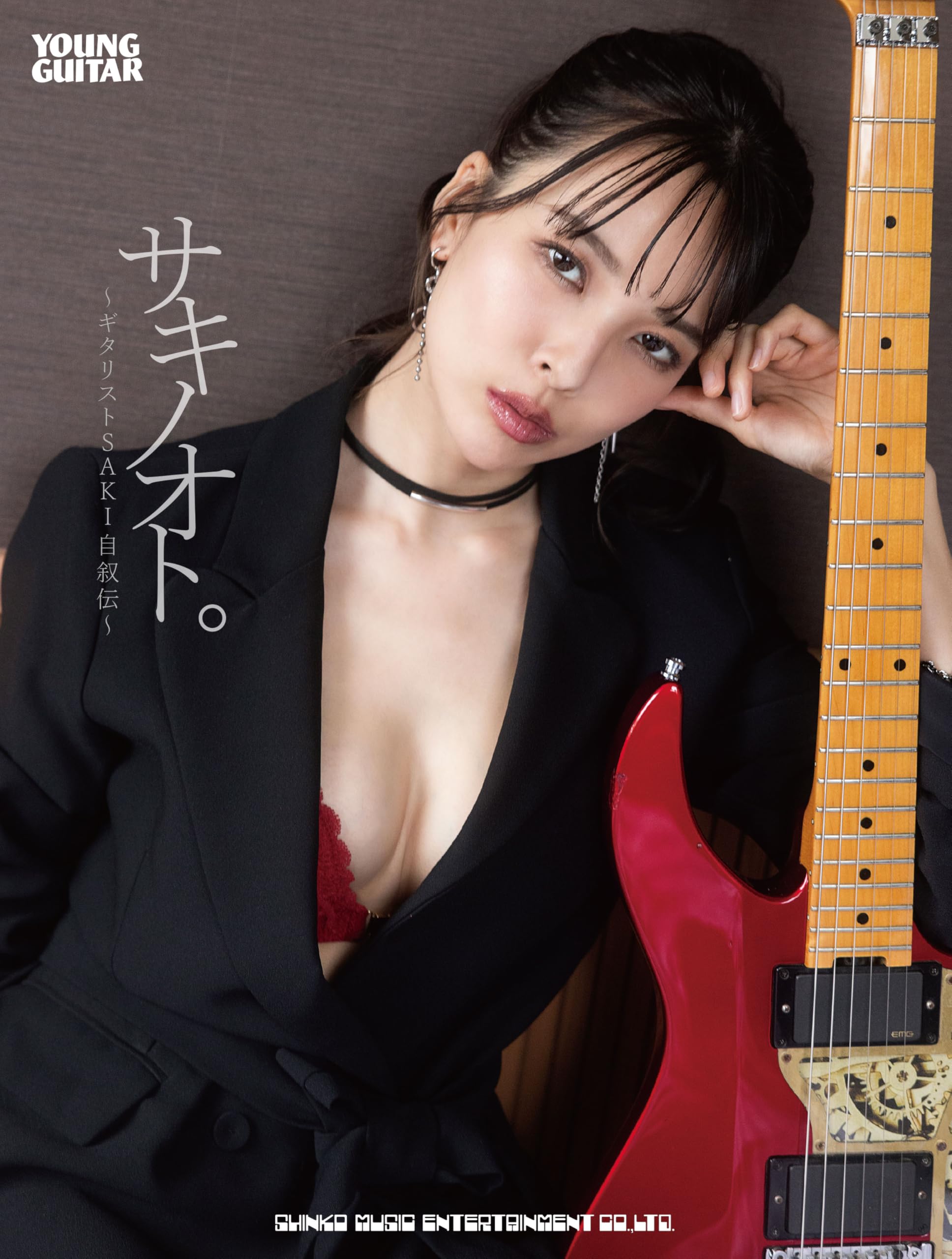
Your autobiography Saki no Oto was published in February this year. Your childhood dream was to be a novelist — did writing the book give you a sense of achievement different from music? And did it influence PLUVIA?
SAKI: You know, I’ve loved horror since I was very young. Dark atmospheres, unsettling stories, that whole world — it drew me in from childhood. So, in some ways the novelist I imagined becoming as a little girl was writing something very different from a memoir (laughs). But having a book with my name on it, holding something like that — that feeling was real and entirely its own. It wasn’t like finishing an album. It was quieter than that. More private somehow. The process was humbling too. It wasn’t me sitting alone writing from scratch — it was done through interviews, someone asking me questions and drawing things out, and then going back through all of it. From the very beginning. Birth, childhood, every band, every turning point. And when you do that — when you actually sit with your own story from the outside — things surface that you’d buried without realizing it. Moments where I thought, I wish I had handled that differently. People I thought I’d made peace with. Versions of myself I’d forgotten. It was uncomfortable at times. But necessary. And I think that’s exactly why PLUVIA sounds the way it does. By the time I sat down to make the album, I had already done the excavation. The hard looking-inward had happened on the page. So, when I came to the music, there was nothing left to fight through — just this calm, flat, open space to work from. The book cleared the ground. PLUVIA is what grew in it.
—Through writing the autobiography and making this album, did you discover anything new about yourself?
SAKI: I did. It was a very introspective time. I have discovered that I had been pushing myself too hard. Forcing things. For a long time, I was so focused on what was being said around me — comments, opinions, expectations — that I lost sight of what actually matters. Going through everything, the book and the album, I came to understand that life becomes so much easier when you stop worrying about what other people say and just allow yourself to be who you are. I’d been overexerting myself more than I realized. That was the real discovery.
—That’s a very important discovery. That kind of realization doesn’t come easily. But when it does, you can hear it in the music. So — what was the emotion you felt most strongly while making PLUVIA?
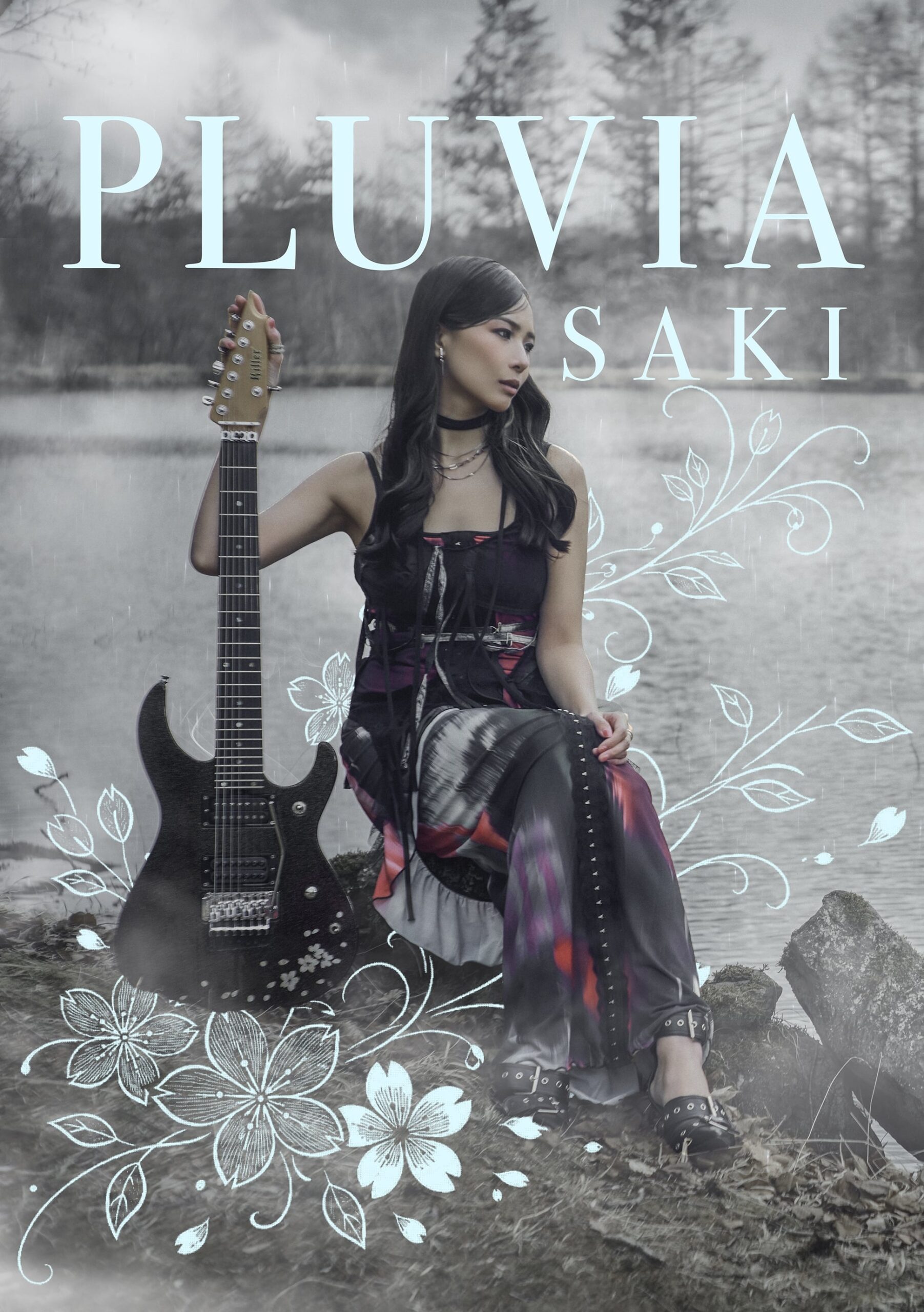
SAKI: Honestly — calm. Peaceful. The image I keep coming back to is a lake. Still, flat, undisturbed. Which is actually what you see on the album cover. There was joy in the process, and other feelings too — it wasn’t emotionless. But everything was blended together into this even, level state. No single feeling taking over, no turbulence. Just everything existing at once, quietly. That flatness — that’s the album. Like a waterside where rain falls, and flowers bloom.
—You wanted to be a novelist as a child. You must love words. If you had to describe PLUVIA as a story — in words — what story would it be?
SAKI: Oh wow, that’s a very difficult question (pauses). It might sound dramatic, but I think everything I’ve thought about, struggled with, gone through — across my life and my entire career in music — all of it is somewhere in this album. So, if it were a story, it would be about someone who worried, who got lost, and who found their way through. I grew up loving horror. Dark atmospheres, gothic moods — that world shaped me as a reader. And while PLUVIA is nothing like that in terms of content, I think that darkness is still somewhere in the music. You can feel it underneath. But it’s not a story that ends in the dark. It’s a story about coming out of it.
—Going forward — are you interested in combining music and words? Writing your own lyrics, working with a guest vocalist, or even singing yourself?
SAKI: When I got the offer, I assumed I was being asked to feature guest vocalists. But the label said — let’s make it guitar only — and that became the direction. And I’m glad it did. But of course, I want to try new things. I’ve written lyrics before, in earlier bands, so that’s not unknown territory for me. Singing myself… I’d need to become a much better singer first (laughs). That’s not something I’m seriously considering right now.
—Writing your memoir and making a solo album — both require deep time alone. But standing on stage with other musicians is the opposite. The summer tour is coming. Between solitary creation and the bright energy of the stage — which feels more natural to you?
SAKI: They really are completely different things (laughs). Like, genuinely opposite experiences. Composing alone feels like knitting. You’re building something quietly, stitch by stitch, just you and the work — and when it comes together there’s this deep, private satisfaction. Nobody sees the process. It’s entirely yours. And then the stage is… everything that isn’t that. The crowd, the energy, the back and forth between you and the audience and the other musicians. Nothing is private anymore, everything is immediate, and you have to be fully present in a completely different way. But if I’m honest — live wins. Just slightly. Because in the studio you’re alone with the music. On stage you’re sharing it. And that exchange with the audience, that moment where something you made in complete solitude suddenly belongs to a room full of people. There’s nothing quite like that feeling.
—I can’t wait to see that.
Thank you so much SAKI for this beautiful interview. I had a wonderful time. Before we finish — I have to ask, I kept watching your nail art throughout and I was wondering, how do you play with long nails?
SAKI: I can’t wait to see you on tour then. And about the nails, no no, look — the nails of this fret hand are short. See? They’re pretty short. Actually, you have long nails on one hand too.
—Good catch, I’ve actually started playing a little guitar recently.
SAKI: Really! Well, if your fingers hurt, try thin gloves. A lot of guitarists use them — including me. The really thin ones. The feel doesn’t change much from playing bare, and it helps a lot when it gets painful.
—What brand do you recommend?
SAKI: Daiso (everyone bursts into laughter).
—A 100-yen shop will do then (laughs).
Thank you so much SAKI, I wish you the absolute best with PLUVIA and the upcoming tour.
SAKI: Thank you, Mandah and VMJ. See you at the show!
Mandah FRÉNOT
(c) VMJ
─────────────
⩺ OFFICIAL WEBSITE | HERE
⩺ OFFICIAL X | HERE
⩺ OFFICIAL INSTAGRAM | HERE
⩺ OFFICIAL YOUTUBE | HERE