
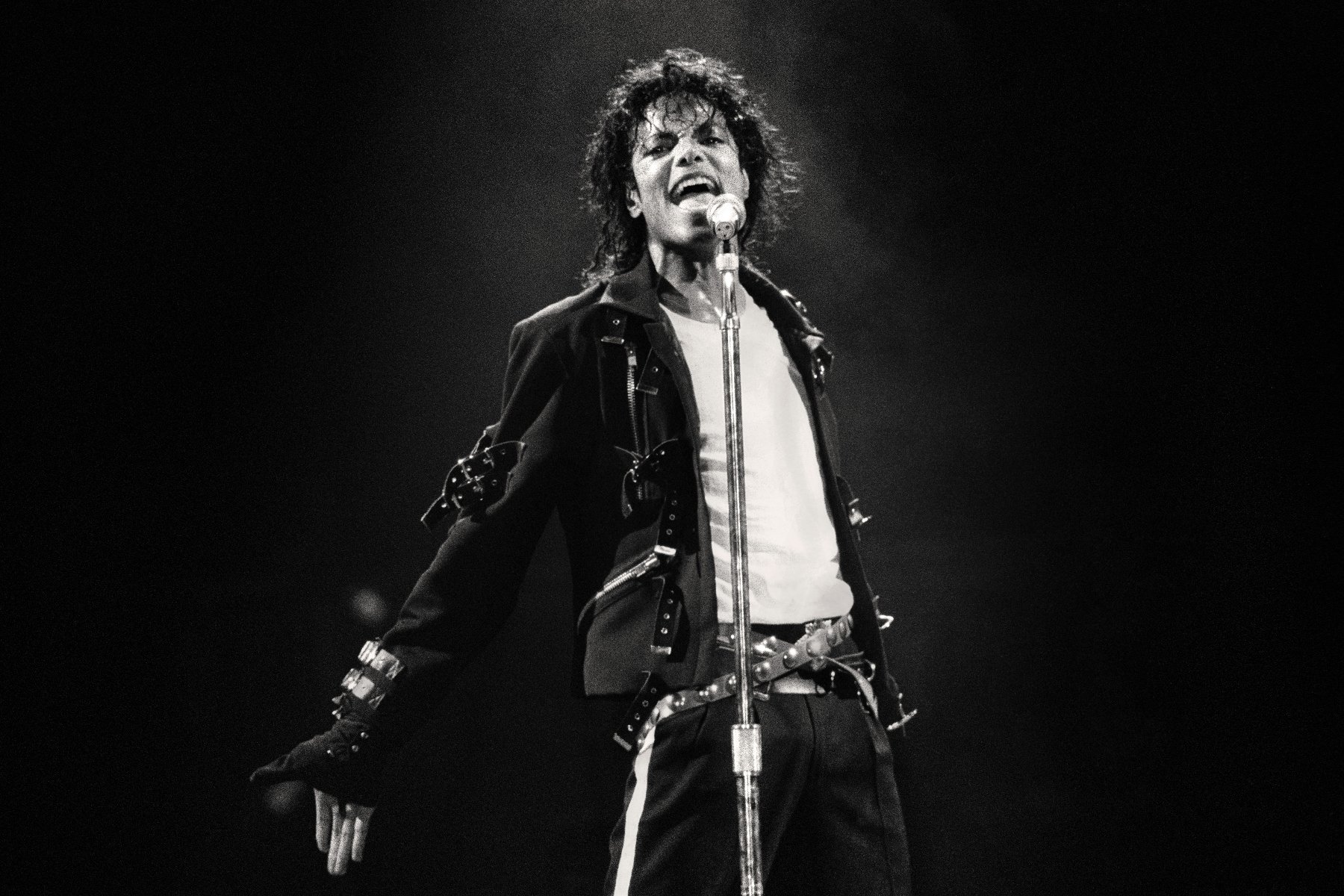
As the 2026 biopic Michael breaks box office records, the history of Western media hostility faces a major wave of revisionism. But the real story lies in the corporate and cultural divide between the West and Japan.
There is a distinct fatigue in watching internet culture discover facts that have been sitting in public court transcripts and federal files for over twenty years. Every week, a new viral thread details the media malpractice surrounding Michael Jackson, framing the narrative as a sudden, collective realization. Yet this shift is deeply ironic. The crowd currently rushing to deify Michael Jackson is largely made up of the exact same public that once fueled the market for his destruction. This collective amnesia has peaked with the 2026 release of the biopic Michael. Opening to a historic $217.4 million weekend, the film has exposed a massive rift: a low 33% critics score on Rotten Tomatoes versus a staggering 95% audience score. For the first time, global audiences have broken entirely from the establishment media narrative. But, the West follows a predictable, pathological pattern: the crowd builds a man up, crucifies him, and then deifies him.
This raises a fundamental cultural question: why did Japan never need to crucify him?

The biopic, the resurrection
Following its global rollout and subsequent June 12th, 2026 Japanese premiere, audiences worldwide have widely praised Jaafar Jackson’s transformative performance as his uncle. Yet, while the film successfully delivers stunning concert sequences, Michael commits a fatal biographical error: it softens the hardworking genius and completely erases Michael Jackson’s sharp corporate intelligence. The script defaults to a tired industry cliché, the fragile, perpetually soft-spoken boy. In doing so, it strips Michael Jackson of his dual identity as a relentlessly disciplined and multidisciplinary master craftsman and one of the most calculating, aggressive power players in the history of the music business.
In 1985, utilizing strategies built across a ten-month bidding war, Jackson outmaneuvered corporate entities and his former collaborator Paul McCartney to purchase the ATV Music Publishing catalog for $47.5 million. When negotiating manufacturing and distribution terms with Sony, Michael Jackson deployed his market dominance like an industrial weapon. Backed by entertainment attorney John Branca, he secured a historic royalty rate of approximately $2 per album for Thriller, roughly four times the standard industry average at the time.
This calculated corporate execution explains the profound hostility he generated within industry boardrooms. A sovereign Black artist held the publishing rights to Western rock history and dictated terms to multinational conglomerates. By omitting these structural corporate conflicts, the biopic produces a severe narrative inconsistency. While his daughter, Paris Jackson, publicly withheld her support due to the “sugar-coated” nature of the estate-controlled script, the film’s structural failures run even deeper. It panders to a simplified fantasy by minimizing or entirely erasing the complex figures who actually shaped his reality, some family members including Janet Jackson, Michael’s initial muse Diana Ross, powerhouse manager Frank DiLeo, songwriter Rod Temperton, or even long-time makeup artist Karen Faye. The result seems a bit corporate-sanitized.
The crucifixion
When Paris Jackson noted that the film would perform well because it acts as a “fantasy,” she was completely right. But to understand why the West needs this fantasy now, we must look at how it treated Jackson when he was alive. When the music industry could no longer control his wealth, the Western media turned him into a scapegoat. According to sociologist René Girard, a community under stress will often pick a highly visible target and blame them for all their problems to feel united again. Jackson was the perfect target. He was incredibly powerful, which made his fall spectacular, and his unique appearance made it easy to treat him as less than human.
The 2003 TV interview with Martin Bashir was his media execution. It was edited to make him look dangerous, causing the public to immediately assume he was guilty. MTV, a network that made millions from Jackson’s legendary music videos, joined the attack. They heavily played Eminem’s Just Lose It, a disgusting video that mocked Michael Jackson’s looks and the tragic 1984 Pepsi commercial accident that left him with permanent burns and permanent and chronic pain.
Yet inside the courtroom, the government’s case completely fell apart. The prosecutor’s decade-long campaign collapsed under cross-examination, leading to Jackson’s complete acquittal on all 14 counts in June 2005. Still, the vast majority of Western media chose to ignore the facts. They ignored that the 1993 physical accusations were disproved by Jackson’s actual autopsy report. They also ignored a 300-page FBI file, released after his death, which proved that a 13-year government surveillance operation found absolutely no evidence of wrongdoing. The media simply preferred a profitable lie over the truth.
The Japanese exception
While much of the Anglo-American press manufactured a cruel caricature of Michael Jackson, majority of Japanese media and cultural institutions treated him with deeper respect. In Japan, he remained Maikeru Jakuson (マイケル・ジャクソン), a shokunin ((職人), a master craftsman of song and dance. His private life was protected by a culture that prioritizes professional boundaries and honors artistic perfectionism over invasive gossip.
This difference is, we believe, rooted in cultural differences. Jackson’s personality matched the Puer Aeternus (Peter Pan), a person who keeps their childhood wonder and refuses to conform to adult norms. While many Western cultural frameworks are more likely to interpret childlike behavior with suspicion, or through a lens of immaturity, Japanese culture easily accepts these traits through the lens of kawaii (cuteness) and artistic purity.
A perfect example of this cultural misunderstanding happened during the 1987 Bad tour in Tokyo. Michael Jackson wore a surgical mask in public, which is a completely normal practice in Japan to protect others from germs or or to maintain personal privacy. Yet, Western reporters claimed this was proof of mental instability. The ultimate irony occurred decades later, when Western governments mandated the exact same behavior as a basic requirement for responsible citizenship during the COVID-19 pandemic.
Furthermore, Japan lacks the Western religious ideas of original sin, crucifixion, and redemption. Japan’s religious and philosophical traditions developed differently from societies shaped by Christianity. This cultural difference is reinforced by giri (義理), the Japanese moral code of lifelong obligation, duty, and loyalty. By contrast, Western entertainment industries have often prioritized reputational risk management, creating incentives to distance themselves from controversial figures. In Japan, long-term relationships and institutional loyalty have historically carried greater weight.
As a result, Japan became Jackson’s commercial and emotional sanctuary. When hostile US markets caused him to stop touring domestically after 1989, his career relied heavily on international loyalty. This deep bond became undeniable during his exile after the 2005 trial. Physically and emotionally broken by the courtroom warfare, Michael Jackson hid from the public in Bahrain and Ireland. His only major exception to this invisibility happened in May 2006, when he flew to Tokyo, Japan. He accepted the MTV Japan Legend Award, visited orphans at the Seibi Gakuen Children’s Home, and surprised the nation by appearing on the hit TV show SMAP×SMAP. Standing on the Tokyo stage before a crowd that had completely refused to participate in the Western boycott, Jackson told them: “Thank you for your loyalty.” A deliberate choice of words.
The variable crowd
Today, the online rehabilitation of Michael Jackson’s image seems unstable because it relies on the same fickle mechanism that once destroyed him: crowd psychology. The public appetite for unverified heroic counter-narratives, such as the viral conspiracy theory claiming the Epstein files prove Neverland was built as a rescue sanctuary, mirrors the uncritical gossip of 2003. The widespread dissemination of a deepfake video mimicking Macaulay Culkin exemplifies this trend.
In this rush to turn Jackson into a saint, the crowd has simply found new targets. Fans now routinely bully his daughter, Paris Jackson, or Karen Faye on social media because they refuse to support the sanitized biopic script. They also bitterly attack the memory of Lisa Marie Presley, rewriting history to blame her entirely for the failure of their marriage. Everything is now viewed through a black-and-white lens, as if Michael Jackson were an untouchable deity, a saint.
But, to truly understand Michael Jackson, one must bypass both the sanitized fantasy of the estate and the grotesque distortions of the tabloids. A rare glimpse of the real individual exists within The Glenda Tapes, unauthorized recordings of private phone conversations from 1991 to 1992. The man captured in those files is neither an icon nor a monster. He is a highly complex, isolated professional who candidly traces his eating disorder to a psychological need for autonomy, admitting, “The only control I had over my life was eating.” He was entirely capable of cold executive decisions, firing manager Frank DiLeo in 1989 to maintain creative control, yet pragmatic enough to rehire him twenty years later.
The public’s inability to see this complex human reality mirrors Marina Abramović’s foundational 1974 performance art piece, Rhythm 0. Standing motionless next to a table of objects, Abramović allowed a crowd to do whatever they wished to her body. When granted total freedom without consequences, the crowd’s initial gentleness dissolved into extreme, predatory cruelty, slashing her clothes and pointing a loaded gun at her head. Yet, the moment the performance ended and Abramović simply walked toward them as a real human being, the crowd scattered in panic and shame, unable to meet her gaze.
Today, many people who once accepted sensational narratives appear eager to distance themselves from them. The public, unable to face their historical complicity in Michael Jackson’s destruction, leverages digital mythology to convert past guilt into modern righteousness. Yet, perhaps the West simply needed this resurrection. Much like the archetypal cycle of Jesus, the culture that once crucified him required a way to rebuild him, to find a collective peace, and to rewrite its own history. The crowd changed its mind only when the biopic made adoration socially safe again. The West desperately needed to go through this chaotic process to heal its own guilt. But in Japan, this process was never required. The genius of the music was always the constant. It remained perfectly intact in Japan, while it had to be violently restored in the West.
─────────────
Mandah FRÉNOT
(c) VMJ
⩺ OFFICIAL WEBSITE | HERE
⩺ OFFICIAL INSTAGRAM | HERE
⩺ OFFICIAL X (ex-TWITTER) | HERE
⩺ OFFICIAL YOUTUBE CHANNEL | HERE