
Zilqy: rise to liberation and global expansion
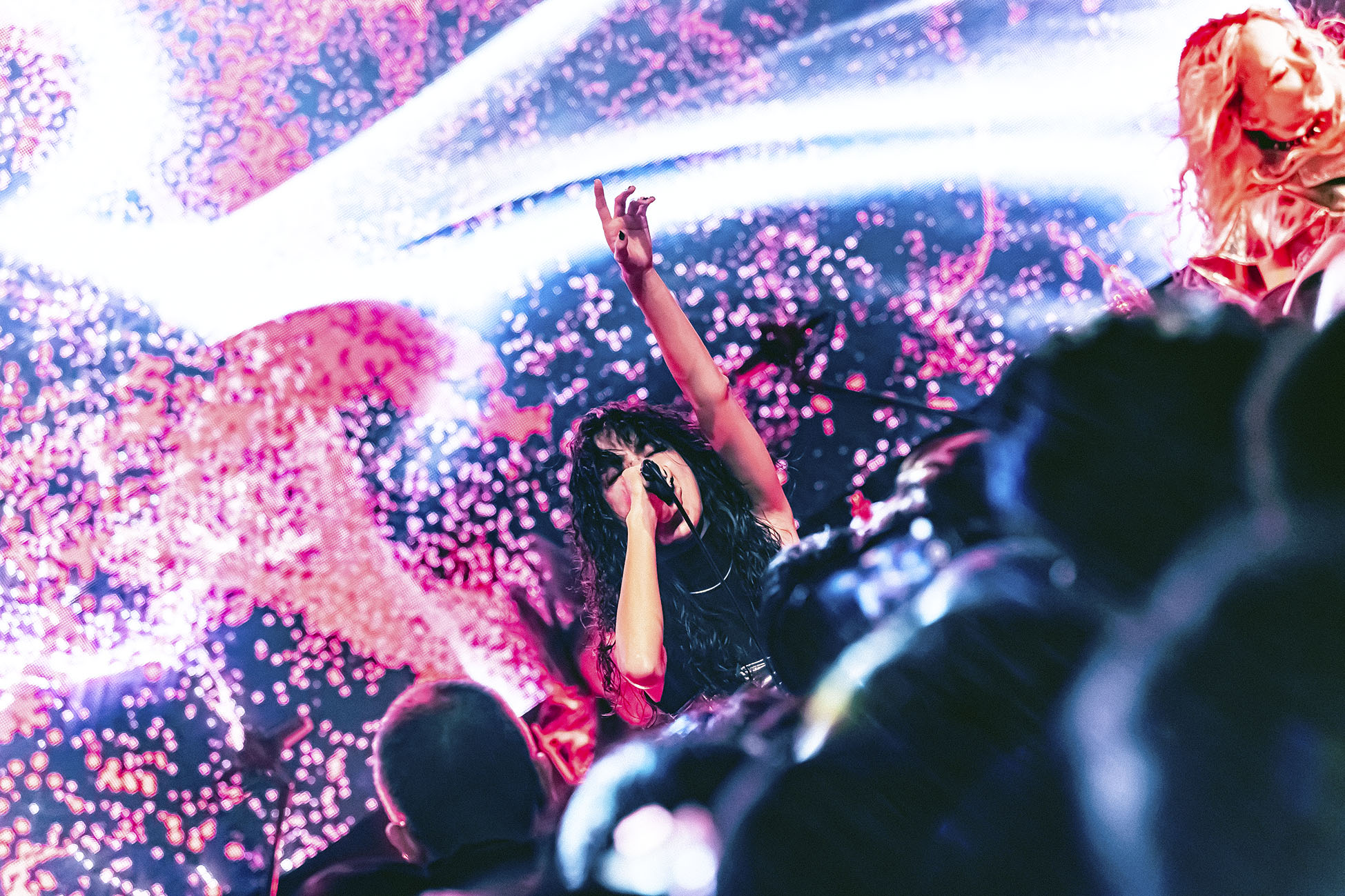
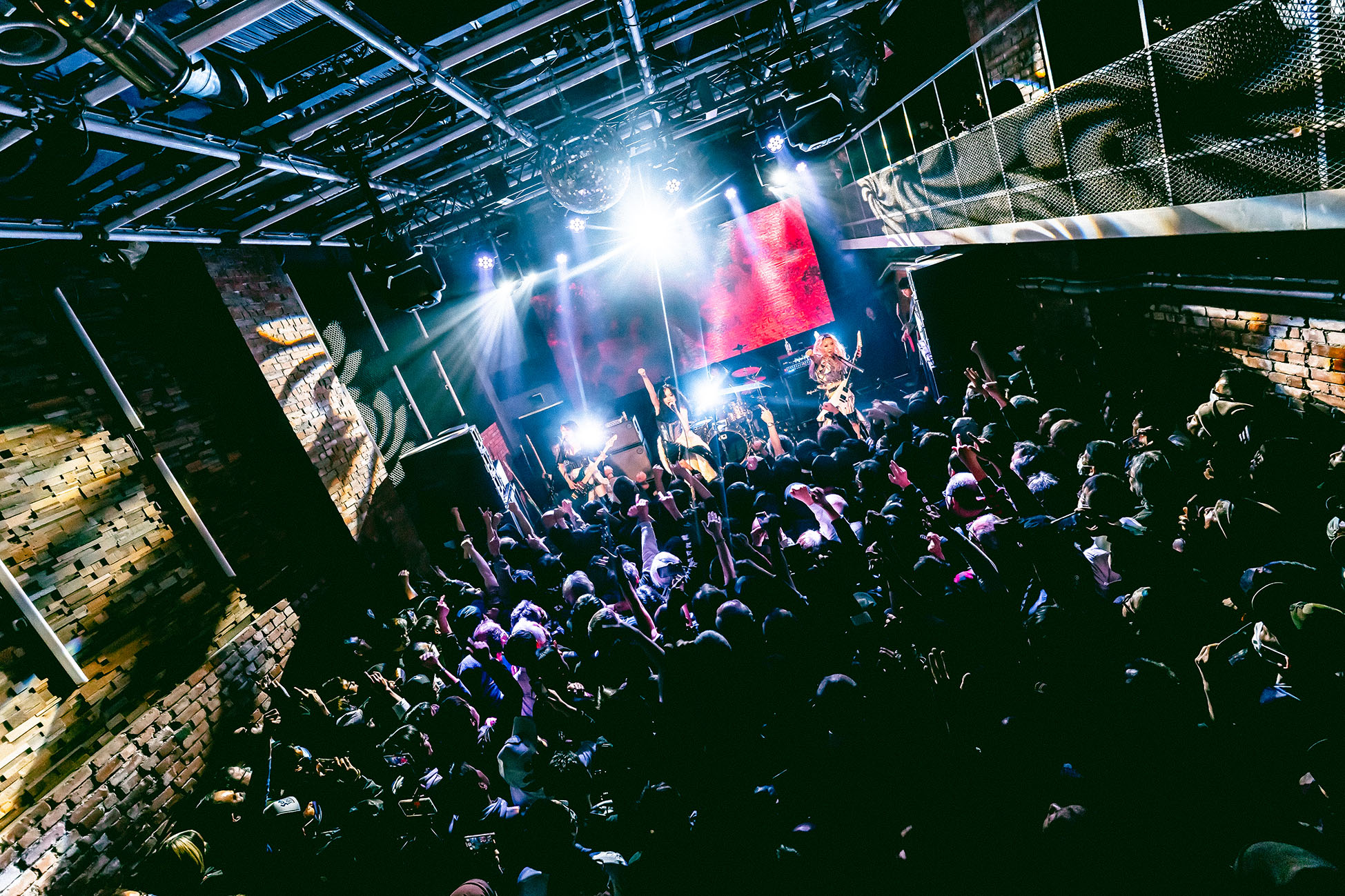
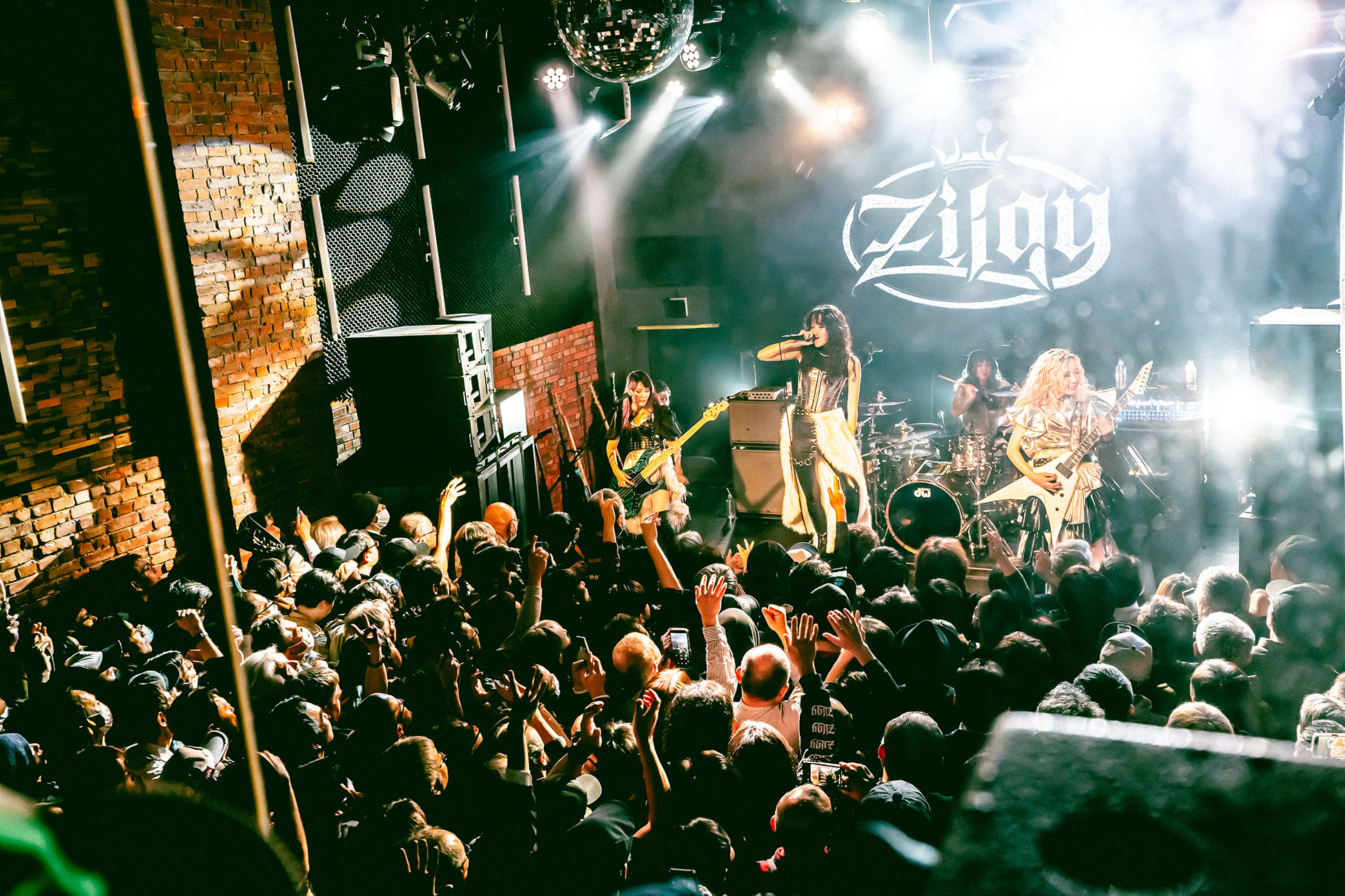
On December 10 2025, in a packed Space Odd located in Daikanyama, a sophisticated and a trend forward residential and cultural district in the Shibuya ward of Tokyo, something unusual happened. It wasn’t merely the debut of a new band. It was the beginning of a story that felt unexpectedly urgent, intentional, almost revolutionary. Only weeks after the release of their first EP, titled Vacant Throne, four women stepped on stage for their first-ever live show. And yet the venue was sold-out, overflowing with fans from Japan and abroad. The atmosphere and energy felt less like curiosity and more like genuine anticipation. In a scene that has watched the rise and fall of countless acts, one could ask:
Why Zilqy?
Why now?
And why the sudden attention?
The answer is layered, so let’s dive in.
The Weight of a First Step that Felt like a Run
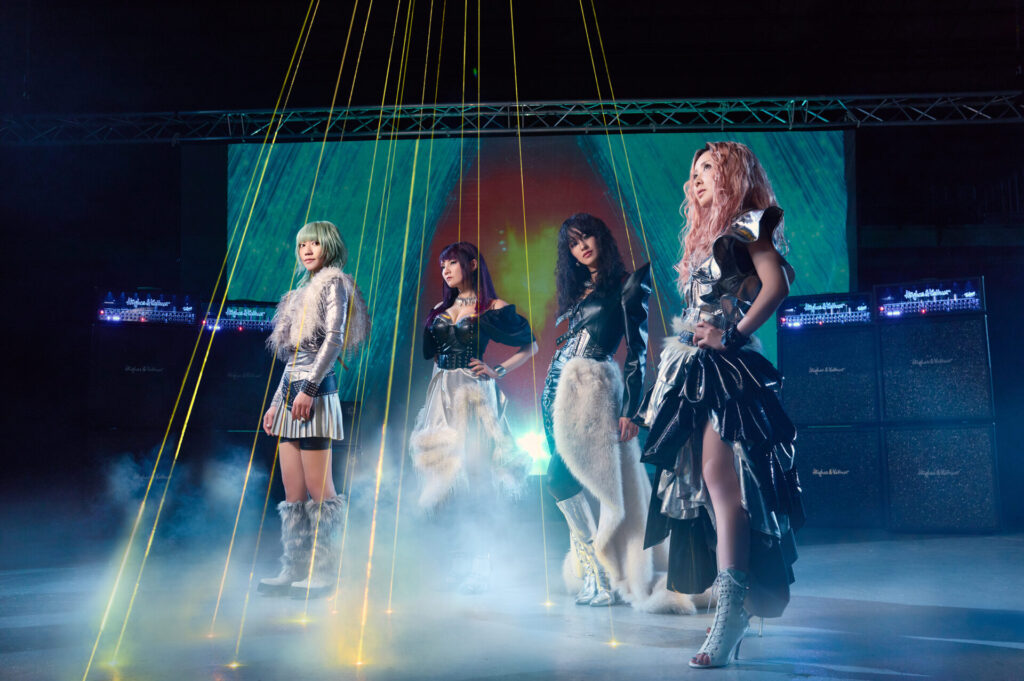
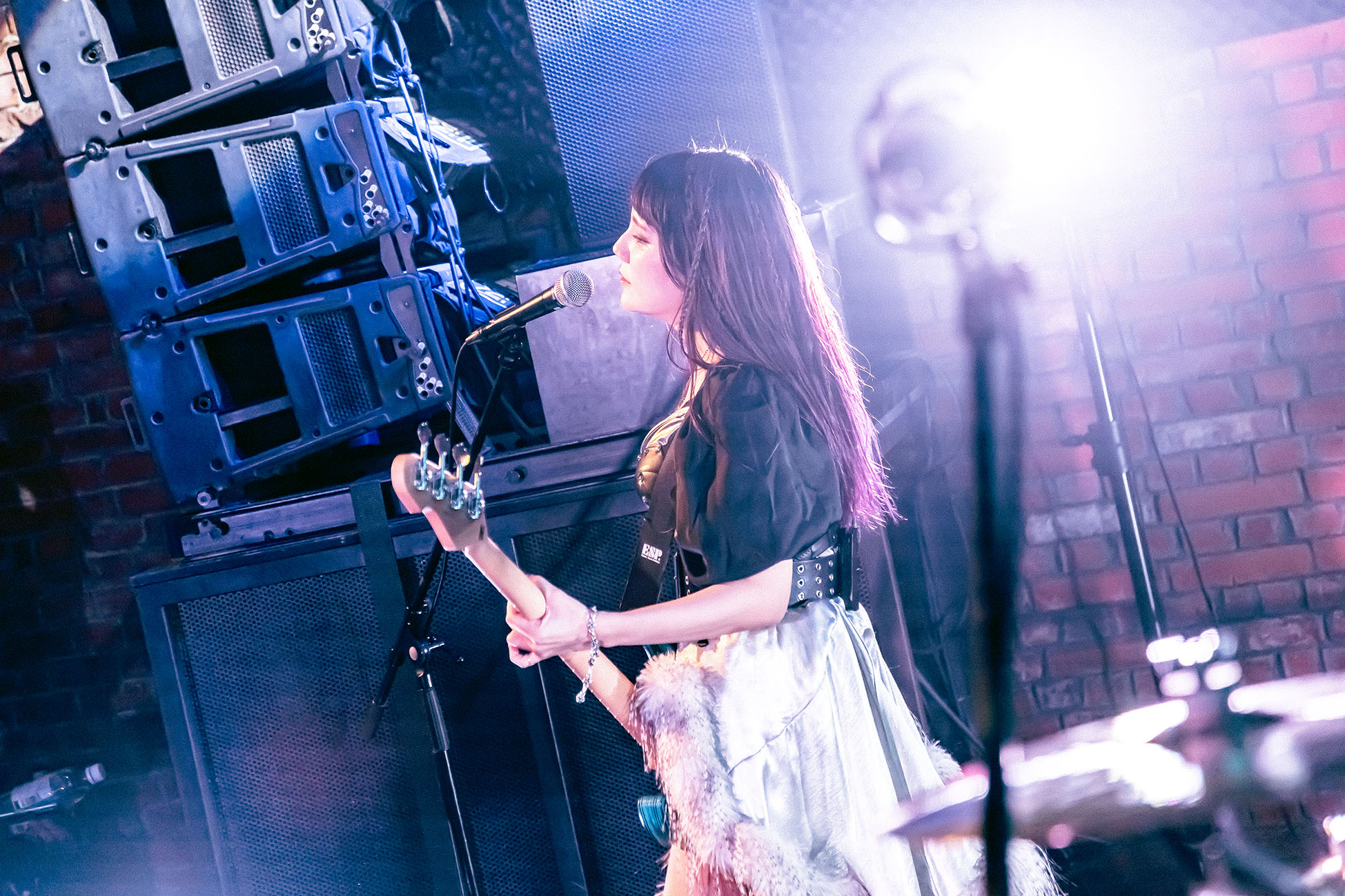
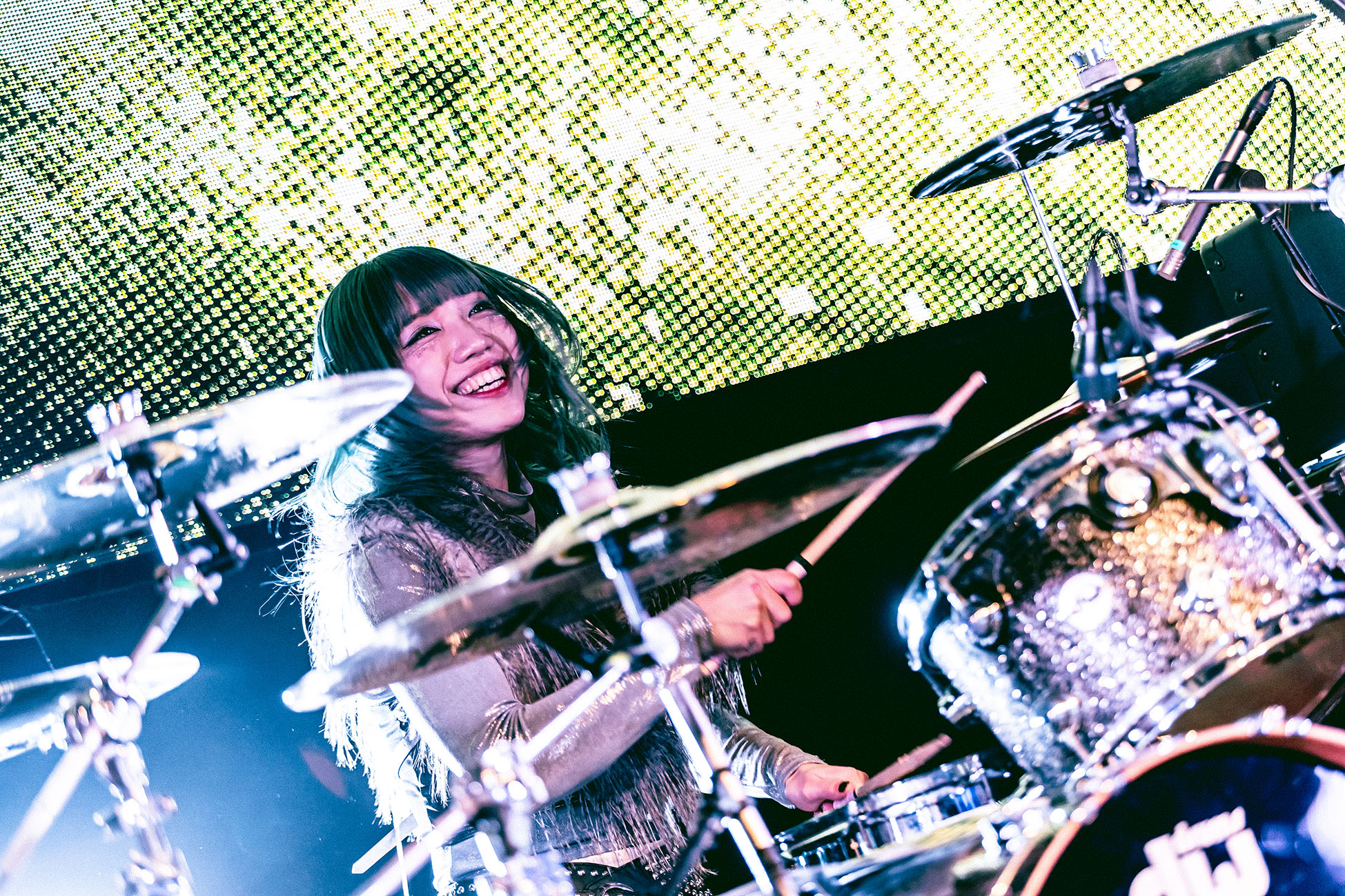
When the lights dimmed at 7:10 PM., the members entered one by one — drummer Kano, guitarist Toki, bassist Miho — with vocalist Anna appearing last, leaning into the mic to ask simply, “Are you ready?” From the first moments, it was clear: this did not look like a debut. The way they moved, the way they breathed the stage, the quiet certainty behind each gesture — everything signaled experience, not hesitation. Kano’s drumming hit first: an immediate powerful force that anchored the entire room. Miho, who once believed her music career might have ended for good (press conference), played with a grounded intensity that comes only from someone who has returned to a place they thought they’d lost. Toki’s precision and energy created an elegant counterbalance — the kind of presence that shows deep respect for both the music and the musicians beside her. And Anna commanded the stage with ease, reaching toward the hands of the front row, locking eyes with fans, performing as if she had always belonged there.
What stood out was not effort, but flow. No one seemed to be pushing or proving anything. Their friendship made the performance feel natural, already lived-in. But the heart of the night wasn’t only what happened onstage.
A Band Born in Experience, Not Youth
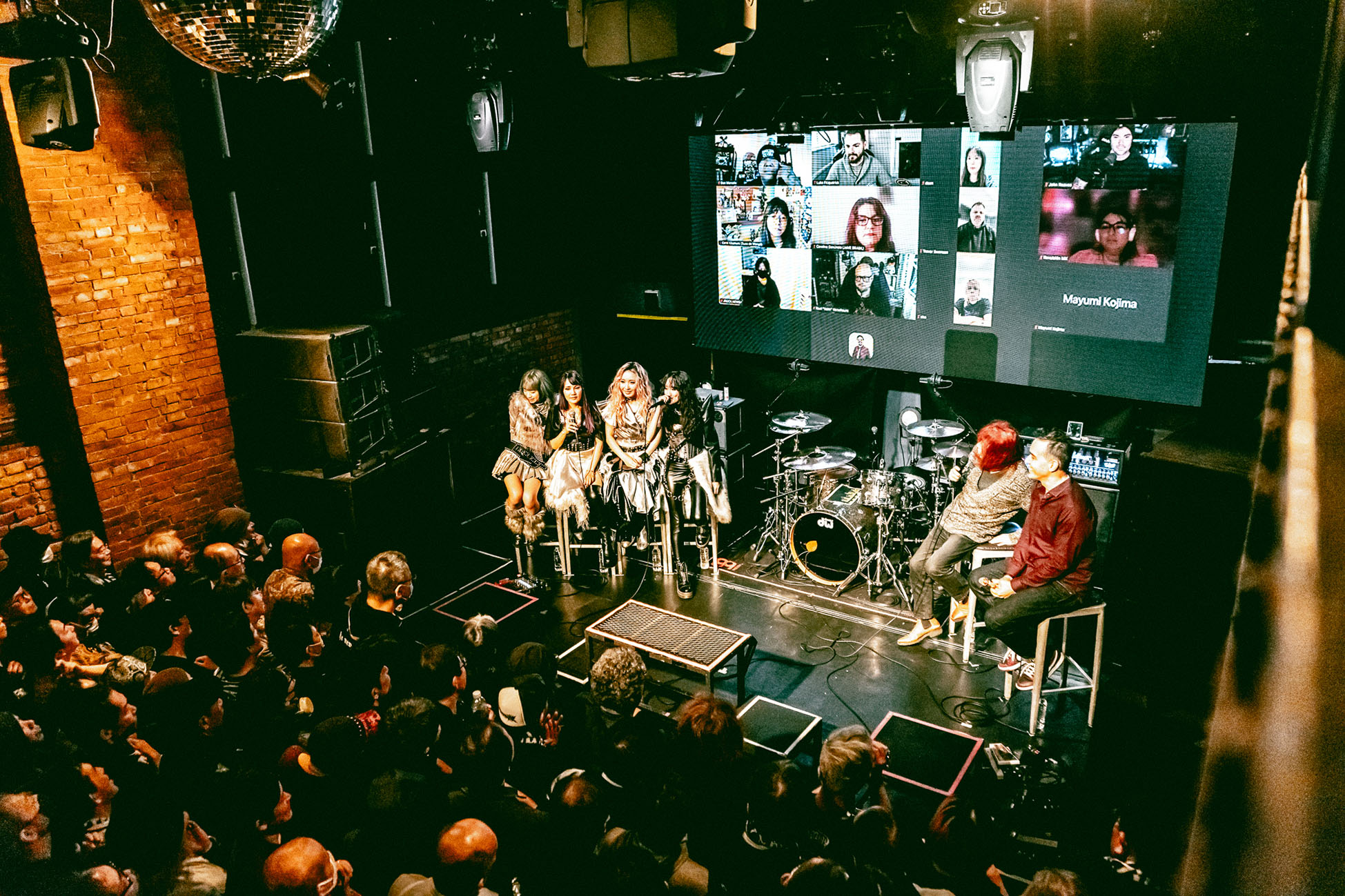
Their experience shows on stage — anyone could see that. But what stayed with us wasn’t just how they played. It was the psychology behind it, the stories they carried with them, the weight of the years that somehow turns into light when the spotlight finally hits. The moment that really cut through the noise didn’t even happen during the show. It came later, in a quiet press-conference room, when bassist Miho decided to be brutally honest in a way musicians rarely are on debut night. She talked about the moment she thought her music life was over — walking away from her old band, watching COVID wipe out stages and entire futures, convincing herself that maybe life had chosen something else for her. And then she said the kind of line that makes a room stop:
“When you think it’s over,
when you think there’s no way back,
something great can happen when you least expect it.”
And suddenly it made sense.
Zilqy isn’t a baby band trying to find its footing. This is four women who’ve lived — really lived — who’ve lost things, burned out, rebuilt themselves, and somehow found each other at the exact moment they were all ready to step back into the fire. That’s why their debut hits different. It doesn’t feel like a beginning. It feels like momentum. Like four separate lifelines snapping together and pulling in the same direction for the first time. Their story isn’t built on potential. It’s built on what they’ve survived. On the choices they’ve had to make, the things they let go of, and the things they refused to let die. Maybe that’s why the night didn’t feel like watching a new band at all. It felt more like watching a story restart — one that had been waiting for the right moment, and the right people, to finally come alive again.
From Nothing to Queen — The Democratic Spirit of Zilqy
The band’s name says more than you’d expect.
Zilch — nothing.
Queen — sovereign.
Put them together and you get something strange, almost contradictory: a queen who belongs to no one, yet could be everyone’s queen. A ruler of zero, and therefore a ruler of freedom. It’s not just a name — it’s a real philosophy. During the press conference, Anna didn’t hide from the heavier truths. She talked about suppression, about the pressure to behave, about the way people learn to swallow emotions until their own voice starts to feel foreign. Expectations, self-control, stress — the everyday weight many carry without ever naming it. Then she said:
“It’s okay to break free and be yourself.
That’s the message.
Rise to liberation.”
When the conversation shifted to the band dynamic, Anna said:
“This band, it’s like a democracy.
Every member matters equally.
No one stands above the others.
We think about the whole band, not the individual.”
It’s a radical statement in a music culture that loves to crown the vocalist as the center of gravity. But Anna refuses that role. She pushes the spotlight sideways — to Miho, to Toki, to Kano — like she’s physically redistributing the power. And that’s the real heart of Zilqy. Their strength is the sisterhood that happens when four strong identities meet, clash, respect each other, and then choose — actively choose — to uplift rather than overshadow.
A band built like a democracy.
A name built on nothing and everything.
A message built on liberation.
A Global Direction, Already in Motion
Zilqy doesn’t tiptoe around their ambitions. “Global All-Female Metal Band from Japan” is their statement. It means four women stepping straight into a field still dominated by men, and choosing to speak to the world from day one. No waiting for timing. No waiting to prove themselves domestically first. And they’re not doing it blindly. Zilqy has already aligned with American booking agency Dynamic Talent International, a clear sign this isn’t just a dream scribbled in a press release. Festivals, overseas development, long-term planning — all the machinery required to launch a Japanese metal act into Western awareness is already quietly turning in the background.
Unusual? Absolutely.
Especially for a band that was only announced a matter of weeks ago.
During the show, they performed two new tracks that might appear on their first full album due in autumn of 2026. Even without titles, the response in the room made one thing obvious: the international market isn’t watching out of curiosity — it’s watching because the music has teeth. Their style, which they call Post-Melodic Nu Metal, lives at the intersection of cultures: Western heaviness, Japanese sense of melody, and electronic modern tension stitched into a new shape.
Looking Toward the Future: Rise to Liberation Tour 2026
───────────
And that shape, they will take it on their first domestic tour.
[ Zilqy Tour 2026 “Rise to Liberation” ]
– 3/22 (Sun) — Kanagawa, New SIDE BEACH!! (Japan)
OPEN 17:15 / START 18:00
– 4/4 (Sat) — Nagoya, ell.FITS ALL (Japan)
OPEN 17:15 / START 18:00
– 4/5 (Sun) — Osaka, OSAKA MUSE (Japan)
OPEN 17:15 / START 18:00
– 5/3 (Sun) — Tokyo, Shibuya WWW (Japan)
OPEN 17:00 / START 18:00
Standing: ¥6,500 (tax included)
Tickets available via e+
Japan: https://eplus.jp/zilqy/
International: https://eplus.tickets/zilqy/
The second lottery round for tickets is open until January.
───────────
Zilqy’s first live didn’t look like a band taking its first steps. It felt instead like four lives, four histories, four stories converging at the same intersection at the exact right moment. There was something lived-in about it — confident, intentional, and surprisingly steady for something this new. Their debut signals a band built on democratic structure, grounded in self-awareness, and driven by an artistically ambitious vision. And though this is only the beginning, one thing is already clear: their rise has started, and an international audience is ready to follow it.
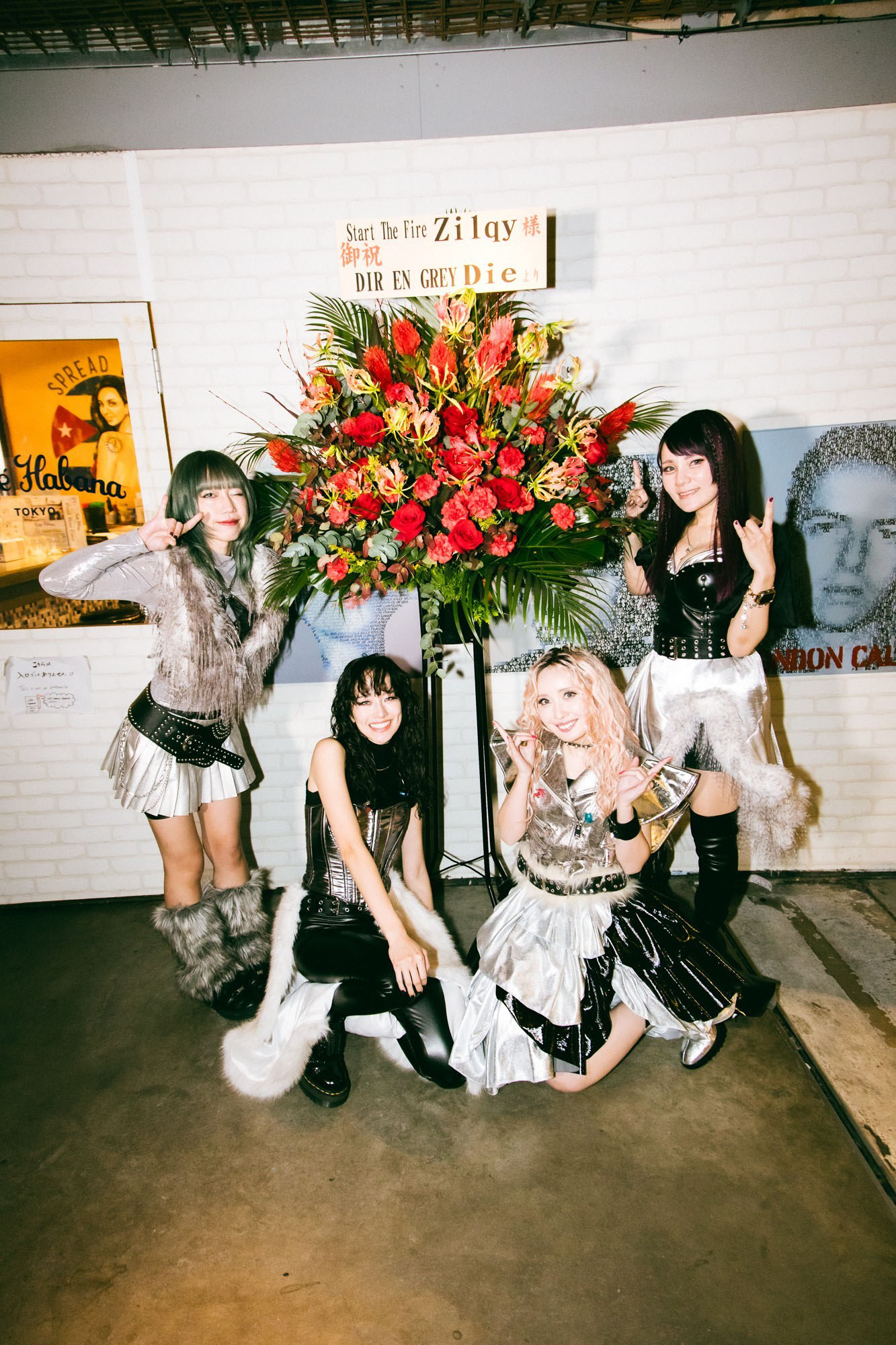
And that feeling, of a debut that didn’t behave like one, was echoes before the show even start. Near the entrance of Space Odd sat a single iwai-bana — a traditional Japanese gift of congratulatory flowers, typically sent by fellow musicians to wish good luck and show respect. And this one came from Die of DIR EN GREY, a guitarist whose band has long established itself on stages far beyond Japan. It was a small gesture, but a meaningful one: a nod from an artist who understands what it means to push a Japanese metal band into the wider world.
Will Zilqy take the same path?
Time will tell, but those first steps are unmistakably, very promising.

Photography by Victor Nomoto – Metacraft
__________________
Mandah FRÉNOT
(c) VMJ
⩺ OFFICIAL WEBSITE | HERE
⩺ OFFICIAL INSTAGRAM | HERE
⩺ OFFICIAL X (ex-TWITTER) | HERE
⩺ OFFICIAL YOUTUBE CHANNEL | HERE