
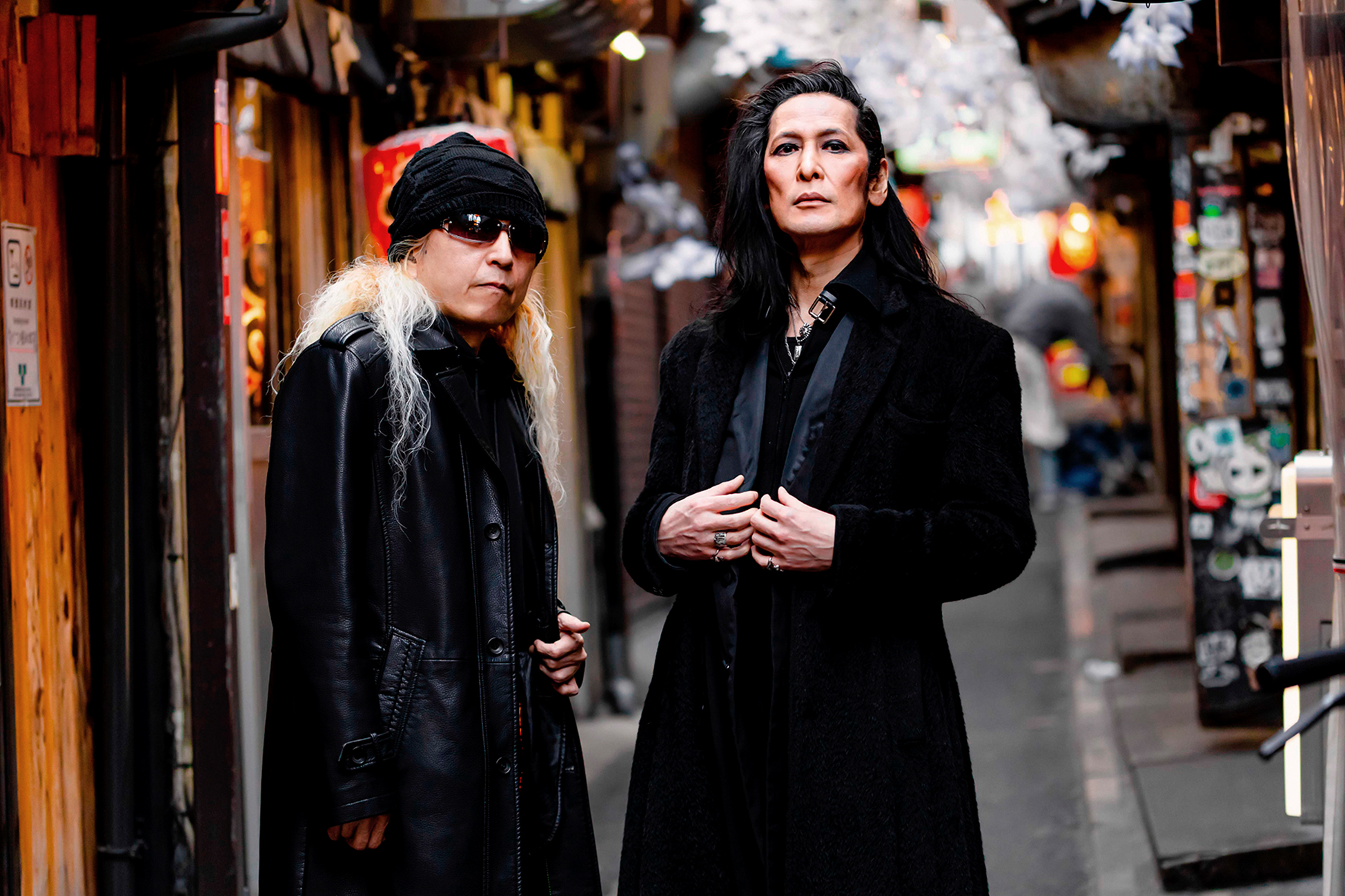
An intimate and open-heart interview with ISSAY and HIKARU from iconic DER ZIBET
DER ZIBET is a Japanese rock band that was formed in 1984. The band’s name is derived from the German word “Der Zibet” which means “the civet” in English. DER ZIBET’s music is often categorized as alternative rock, with influences from punk, new wave, and post-punk. They gained popularity in the late 1980s and early 1990s with their unique sound and energetic live performances. DER ZIBET is known for their catchy melodies, introspective lyrics, and their contribution to the Japanese rock scene. Today, we have the honor to sit down with vocalist ISSAY and guitarist HIKARU for a long open-heart chat.
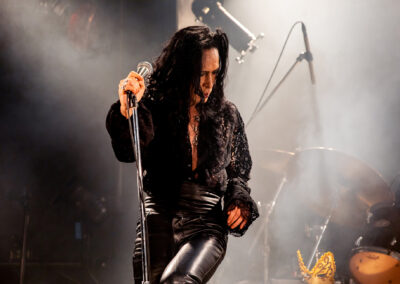
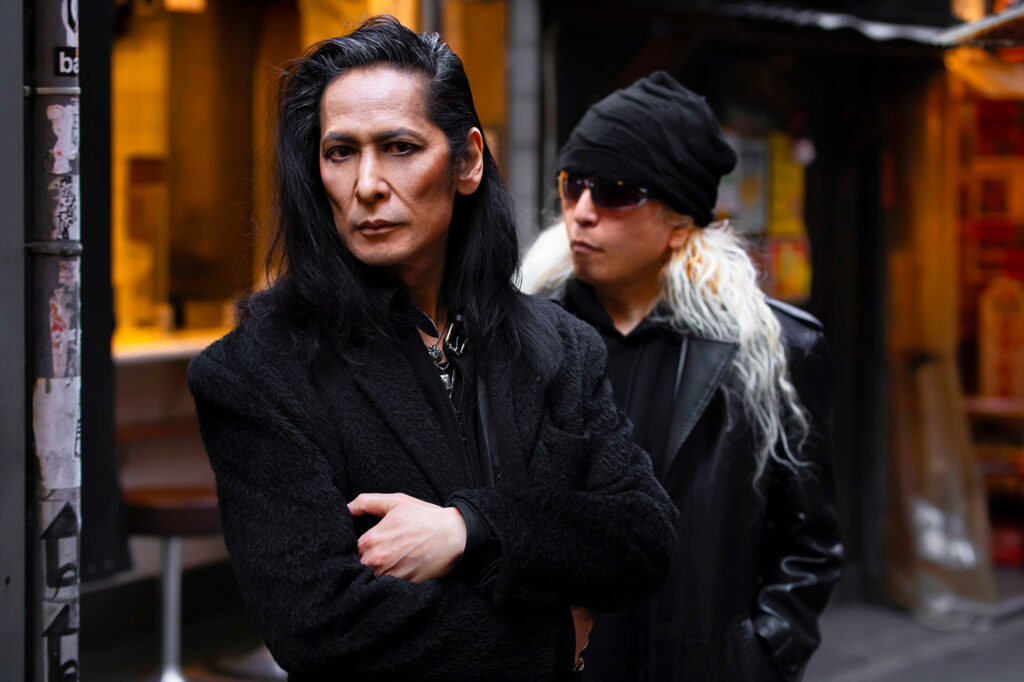 Photography by Yoann CLOCHON
——DER ZIBET was formed in 1984 and made its major debut in 1985. The band is often regarded as one of the pioneers of Japan’s gothic rock scene. For readers discovering DER ZIBET for the first time, how would you describe your musical universe?
ISSAY: When we first started playing together, we weren’t trying to make post-punk or gothic music. That was never our intention. We were simply five young musicians, each with very different musical tastes, coming together. The one thing we all had in common was our love of film scores.
HIKARU: Exactly. Our tastes were incredibly diverse. We didn’t form the band because we all liked post-punk or any particular style of rock. We came together because we felt that, with this combination of people, we could create something unique. Personally, I’ve always loved French pop and film music, and I still do. Our shared passion was music written for the cinema.
ISSAY: That said, I’ve always loved many bands from the gothic scene. I adore SIOUXSIE AND THE BANSHEES, JOY DIVISION, and of course BAUHAUS. Looking back, BAUHAUS probably did influence me to some extent. I was deeply drawn to their aesthetic. The gothic scene itself has always fascinated me, but it was never our goal to become part of it when we formed DER ZIBET. In early-1980s Japan, that movement barely existed anyway. At least, we didn’t use the term “gothic” yet. Back then, any band outside the mainstream was simply considered “underground,” regardless of its musical style. It was an umbrella term for artists who didn’t fit the commercial mold. The idea of a distinct gothic movement in Japan hadn’t really taken shape yet.
——I see.
DER ZIBET is often described as one of the pioneers of Japan’s gothic scene. How does it feel to hear that?
ISSAY: To be honest, it doesn’t surprise me. Deep down, I can understand why people tend to associate DER ZIBET with the gothic scene. That said, I’d never describe us as pioneers of any particular genre. Of course, hearing that makes me happy. Who wouldn’t be (smiles)?
——What was your goal when you started DER ZIBET?
ISSAY: Hum… What was it (laughs)?
HIKARU: We didn’t have one, did we (laughs)?
ISSAY: Well, actually… now that I think about it, we did. In the beginning, our goal was to get the attention of a major record label. We wanted to be signed. We kept telling ourselves, “Let’s focus on writing great songs. Let’s create music that’s interesting enough to earn our major debut.” That was the mindset we all shared. Back then, signing with a major label meant having far more opportunities. It gave a band the chance to reach a much wider audience.
——And, after a 37-year-career, what has become your goal?
ISSAY: Hum… Our present goal is to do and make interesting or fun things, whether in terms of musical content or not. Now that we don’t belong to a major record company any longer, we want to enjoy our creativity and our deadline-free policy to the fullest. We don’t want to have any creative restrictions ever again. Back in the day, we were a bit focused on what people would have to say about our music. It’s not the case anymore. We do things are way, take it or leave it.
——HIKARU, do you agree with that?
HIKARU: I do (laughs). What I love the most about the band at the time being is the simple fact of being able to write and compose music with the other guys in a pleasant atmosphere. I like what the band has become. The whole creative process is enjoyable. It’s really amazing to be able to keep releasing interesting albums together and all the more so since we all get along very well.
——You have been together for 3 decades, how has your relationship evolved?
HIKARU: The ten-year hiatus actually had a very positive impact on us. Looking back, I think it brought all of us much closer together. We were finally able to put our differences behind us, and ever since then everything has felt remarkably natural. Our relationship couldn’t be better.
ISSAY: I completely agree. In fact, our relationship is much stronger now than it was before the band went on hiatus in 1996.
——Why did you decide to pause and what made you come back together?
ISSAY: To be completely honest, things had become very difficult during the last few years before we decided to stop. HIKARU and I were constantly at odds with one another. Our ways of thinking had grown so different that we found ourselves clashing over almost everything. Eventually, we came to the conclusion that we simply couldn’t continue as a band under those circumstances.
HIKARU: WIt was our bassist, HAL, who ultimately brought us back together. He was involved in a very serious accident, and there was a time when I genuinely didn’t think he was going to survive. Afterward, he faced a long and difficult rehabilitation before he was able to play again.
ISSAY: Once he had recovered, he started reaching out to the musicians he wanted to play with again. Naturally, every member of DER ZIBET answered his call. We all wanted to see what would happen if we played together once more. The first time we got into a rehearsal studio again, everything simply fell into place. It felt completely natural. At that moment, I realized that making music together was all we had ever really needed.
HIKARU: During the hiatus, from 1996 until 2004, we barely saw one another. After HAL’s accident and his recovery, he brought us back together. For the next couple of years, we took things slowly, rehearsing, playing a handful of shows, and seeing how it felt. Before long, it became clear that DER ZIBET was ready to return.
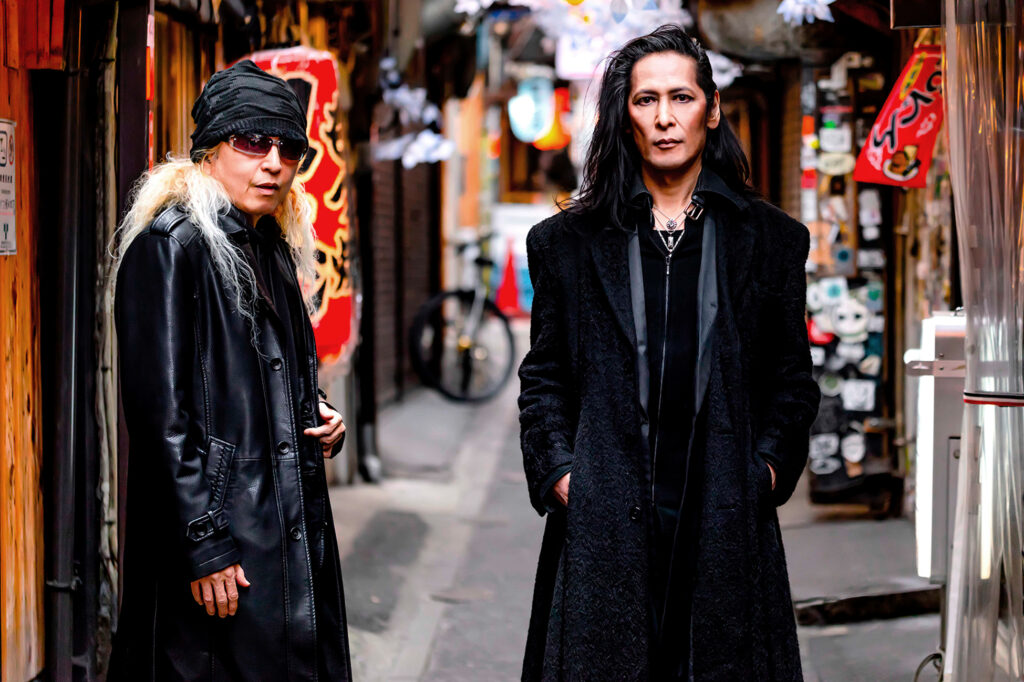 Photography by Yoann CLOCHON
——Do you see each other outside?
HIKARU: We do. We still see each other outside of rehearsals and work, although not over drinks anymore because I quit drinking. I’ve never had any serious health problems, but I reached a point where I felt it was simply time to stop. I think I’d already had more than my fair share over the years (laughs).
ISSAY: Which, unfortunately, has made you a lot less fun to be around (laughs).
——IThat takes a lot of willpower, though (laughs).
Has your creative process changed over the years?
ISSAY:Very much so. In the early days, I would hum melodies to the other members, and they would translate them into music on their own instruments. These days, HIKARU has taken on the role of principal songwriter. He writes the music at home, usually on his own, and he always keeps my vocal range in mind so the songs feel natural for me to sing. Once the songs have taken shape, we all meet in the rehearsal studio. That’s where everyone begins contributing ideas, experimenting, and refining the arrangements together. It’s also where I add my own perspective. We continue shaping the songs until every member feels completely satisfied with the result.
——DER ZIBET’s albums often revolve around a central concept. How does that process begin? Does the concept come first, or does it gradually emerge from the music?
ISSAY: It really depends. More often than not, though, we follow a similar pattern. We meet at a bar, have a few drinks, and spend hours talking about the atmosphere we want the next album to have. That’s exactly how our last album came about. During one of those conversations, the word fujōri (absurdity) came up, and we all felt it perfectly captured the direction we wanted to explore. The same thing happened with Bessekai (Another World), which became the theme of the previous album. Those conversations often mark the true beginning of the creative process. They allow a concept to emerge naturally before we’ve written very much music. That said, it doesn’t always happen in that order. Sometimes we’ve completed nearly all the songs before realizing what ties them together. Only then do we discover the album’s concept and title. So, in a way, we have two very different creative approaches.
HIKARU: Regardless of where the concept comes from, the music itself is always created intuitively. We draw inspiration from whatever we’re feeling and experiencing in that particular moment. The artistic side of songwriting is something we never try to force, it’s always spontaneous.
——Throughout your career, DER ZIBET has experienced both the independent and major-label worlds. Did working with different labels influence the way you wrote music?
HIKARU: ersonally, I don’t think the labels themselves — whether independent or major — had much influence on our music. What major labels did offer, however, were resources. They had far greater financial means to promote and distribute an album, which naturally gave artists a better chance of reaching a wider audience. Thanks to that support, we were even able to record one of our albums overseas, something that would have been much more difficult otherwise. Aside from those opportunities, though, I don’t think being signed to a major label fundamentally changed our music. What it did change was our schedule. There were deadlines everywhere. Everything had to be finished within a very strict timeframe. Today, we’re much freer. We can work at our own pace and take the time we need. In many ways, though, the distinction between major and independent labels isn’t as significant as it used to be.
ISSAY: Hum… I think the influence was perhaps a little more subtle. Major labels naturally encouraged us to write music that would be more accessible and easier for a broader audience to embrace, and I’m sure that had some impact on the way we approached certain songs. Independent labels, on the other hand, generally allow artists much greater creative freedom. That said, I agree with HIKARU. The difference between major and independent labels was enormous in the late 1980s and 1990s. At the time, choosing one over the other meant entering two completely different worlds.
——I see.
ISSAY, how would you describe yourself as a singer?
ISSAY: Gosh, that is a very difficult question (frowns). I’ve always loved cabaret. To me, cabaret is the art of performing in an intimate space, where your ability to communicate with an audience is just as important as your voice. It’s a demanding form of expression because you’re expected to be a performer in every sense of the word, not simply someone who sings. If I had to describe myself, I’d probably call myself a rock cabaret singer. I used to take vocal lessons, although I no longer do. To be honest, I don’t have any particular routine to protect my voice. The only thing I’m careful about is avoiding strong alcohol before a performance. Other than that, I simply go on stage and sing (laughs).
——As the band’s vocalist, you have two equally important roles: writing lyrics and performing them. Which matters more to you—the words themselves or the sound of your voice?
ISSAY: I don’t think it’s possible to separate the two. They’re equally important. Performing is what brings me the greatest happiness. The stage is where I truly feel alive. But in order to express myself honestly, the lyrics have to feel right. If the words aren’t genuine, or if they haven’t been written with enough care, I simply can’t sing them convincingly. It’s almost as though my body rejects them. I can’t find the breath to bring them to life. For me, the lyrics and the voice are inseparable. One cannot exist without the other.
——HIKARU, how did your interest in music start?
HIKARU: It all started with the acoustic folk guitar. I took lessons for about a year and spent countless hours practising, mostly by playing Beatles songs. At the time, I wasn’t thinking about forming a band at all. I simply enjoyed playing the guitar on my own. I must have been around thirteen years old. As my interest in music grew, Jimmy Page became my favourite guitarist. These days, though, the guitarist I admire the most is David Gilmour (PINK FLOYD).
——You’ve often mentioned your love of French pop music. Has it influenced DER ZIBET’s sound?
HIKARU: If I remember correctly, I started listening to French pop when I was about ten years old. I saw Gilbert Bécaud on television and was so captivated that I bought his single. It was actually the very first record I ever owned. I’ve always loved the arrangements found in French pop music. More recently, I’ve been listening to artists such as Zazie and Les Rita Mitsouko, whom I discovered through Apple Music. Sometimes I’ll simply play a playlist called “French List” and let it introduce me to new music. I’m sure those influences find their way into my songwriting somehow, even if I couldn’t explain exactly how. What I do know is that every member of DER ZIBET brings a completely different musical background to the band. That’s one of our greatest strengths. Through them, I’ve learned to appreciate artists like David Bowie and BAUHAUS—musicians I honestly didn’t enjoy very much before (laughs).
——It sounds as though you constantly influence one another.
HIKARU: Yes and no (laughs). Whenever I write a song, I already have a fairly clear vision of what I imagine it could become. But the moment ISSAY adds his voice, his lyrics, and his own perspective, the song inevitably takes on a completely different life. It almost never ends up exactly as I first imagined—and that’s precisely what makes the process so fascinating. That’s what ISSAY brings to DER ZIBET: his unique worldview and his own artistic sensibility. When I send him a demo, I never explain what I had in mind or try to guide him in any direction. I prefer to leave him complete freedom because I’m always curious to discover where his imagination will take the song. Every time, I’m pleasantly surprised by the result.
ISSAY: It’s exactly the same for me. I always look forward to opening an email from HIKARU with a new demo attached. Those moments of discovery are very precious to me. As soon as I hear a piece of music, its atmosphere immediately begins to suggest images, emotions, and a direction. Before long, I can already see the song as a whole. Even at that early stage, I usually have a clear vision of what I want it to become.
——What would like people to take away from listening to your music?
ISSAY: I don’t think our music carries a single, definitive message. More than anything else, I simply hope it can help people. I truly believe that music has the power to heal the soul, and if our songs can bring comfort to even one person, then I would be deeply happy. Beyond that, I don’t think it’s my role to tell people what they should think or feel. What I do hope is that my lyrics resonate with them, that they stir different emotions and leave room for personal reflection. To me, every work of art should remain open to interpretation. Once it’s shared with the world, it no longer belongs solely to the artist; every listener brings their own experiences, memories, and emotions to it, and that’s what gives art its richness. What I find particularly fascinating is the possibility of an emotional connection between the artist and the audience. When we stand in front of a painting, for example, we naturally wonder what the artist might have been feeling while creating it. Our own emotional response may be completely different, and that’s perfectly natural. The important thing isn’t whether we feel exactly the same emotion. What moves me is simply knowing that such a connection is possible. The idea that, even for a brief moment, someone might experience the same feeling that inspired me while creating a song — I find that incredibly beautiful. That’s what excites me most about making art.
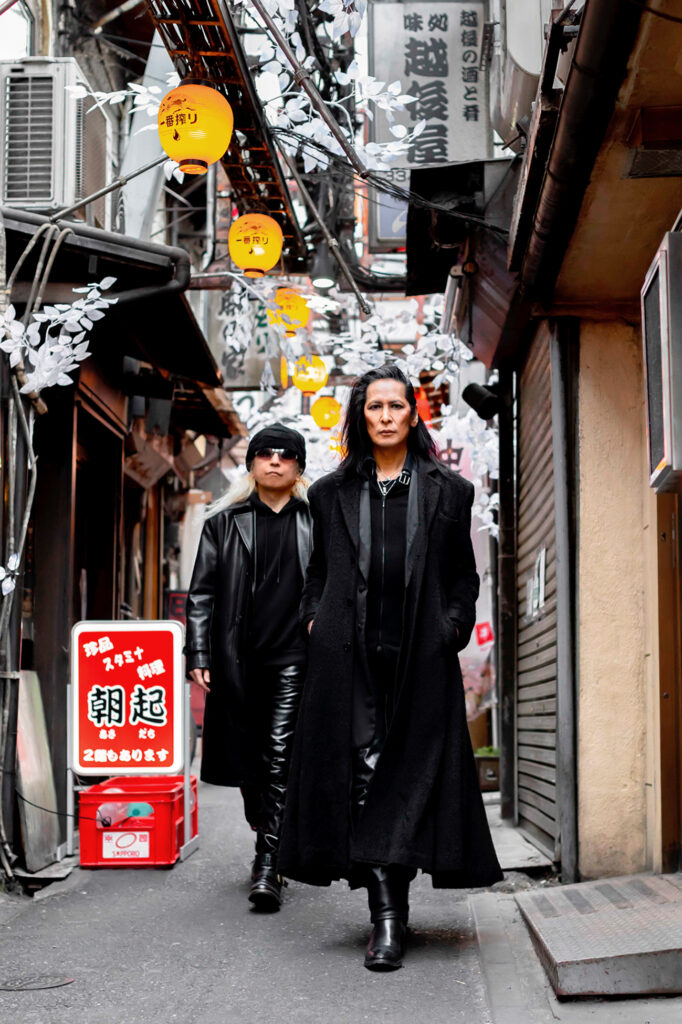 Photography by Yoann CLOCHON
——ISSAY, I know you had a difficult relationship with your father, who was a very dominant and violent figure. In contrast, you have often played with gender expression and challenged traditional ideas of masculinity through your appearance and artistic persona. How do you view this contrast?
ISSAY: I never consciously tried to become the exact opposite of my father. I never thought, “I will become someone completely different from him.” It wasn’t something I forced upon myself. That said, it is true that he represented many things I did not want to become. I remember thinking, “No, that’s not the kind of person I want to be” (laughs). The difference may seem subtle, but I think it’s an important one. I wasn’t defining myself by rejecting him; rather, seeing him helped me understand what kind of person I wanted to be. As I grew older, I also began to understand — or perhaps more accurately, accept — certain things about my father. Time gives you a different perspective on people and on the experiences that shaped you. Overall, I’m grateful that I did not become like him. As for my mother, my father’s second wife after his divorce from my biological mother — she is an extraordinary person. I have tremendous respect for her. Even though I am not her biological son, she raised me with the same love, care, and support she would have given her own child. She is truly a remarkable woman (bows).
——Thank you for sharing something so personal with us. HIKARU, what kind of childhood did you have?
HIKARU: I had a very ordinary childhood. Like many teenagers, I did have some conflicts with my parents during adolescence, but I think that’s quite normal (laughs). Nothing particularly dramatic happened. Compared to ISSAY’s experiences, I had a very easy childhood.
——Do your parents understand your career path? Are they proud now?
HIKARU: I don’t think my parents are particularly proud of me (laughs). They might even feel that my life hasn’t been as successful as they hoped (laughs). I do remember asking them what they thought about my music, but I honestly don’t remember their answer anymore. Perhaps that means it wasn’t something particularly meaningful. I don’t think they ever fully understood what we were trying to create with DER ZIBET.
ISSAY: They probably wished we had achieved greater success as a band (laughs). But I do remember something my mother once said to me. She told me, “Wow, you’re really dedicating yourself to something that matters deeply to you. I don’t necessarily understand your lifestyle or your music, but I can see how much passion and effort you put into it, and I think that’s truly remarkable.” Hearing that gave me a great sense of fulfillment. To know that she didn’t necessarily understand everything, but still respected my dedication, meant a lot to me.
——That’s wonderful. She really does sound like an amazing mother. Speaking of childhood, HIKARU, you won an award at a young filmmakers’ festival when you were younger. Why did you eventually choose music over filmmaking?
HIKARU: Actually, music came first. It was my first love. As I grew older, my interest in film gradually became stronger, so I decided to explore it seriously. I eventually won an award from NHK (smiles). I enjoyed the experience, but at the same time, I realized something didn’t quite feel right. For me, filmmaking was incredibly demanding, especially when it came to writing stories. You have to create something original and compelling, and then somehow translate that vision into images on screen. After that comes the editing process, which requires another enormous amount of time and patience. With music, I feel I can express myself more naturally. The creative process feels more direct. That’s why, in the end, music was the path that felt right for me.
——During DER ZIBET’s early years, you traveled overseas to record an album. Who came up with the idea of recording Garden in London?
HIKARU: It was an incredible experience. It was our first time traveling abroad as a band, and it became a very memorable journey—although not without its difficulties (laughs). It wasn’t my first time overseas; I had already been to Hawaii before. As for the recording itself, the process was actually quite similar to recording in Japan. Still, being in a different country gave the whole experience a special feeling. In the future, I would love to record music in France. I’ve always loved French pop, and I think it would be fascinating to create music there.
ISSAY: Yes, it was definitely not the smoothest trip (laughs). But at the same time, being young and having the opportunity to travel abroad to record an album felt almost unreal. Everything was new, unfamiliar, and exciting. The recording environment itself was quite different from what we were used to in Japan. The acoustics of the studio were not ideal, and we even had to remove the carpet from the floor because it affected the sound (laughs). That’s something you would rarely encounter in Japan. Personally, I felt that the drums lacked a certain depth. The sound was much flatter than what I was accustomed to. But even those difficulties became part of the experience and part of the memory.
——Sure.
Are there any international artists you would have liked to collaborate with?
ISSAY: Unfortunately, many of the artists I would have loved to work with are no longer with us (laughs). Actually, I had a strange dream recently. It’s a little embarrassing to share, but in this dream, the entire world had become one. All borders had disappeared, and every country had united into a single nation. To celebrate this new unity, the world needed an anthem. And for some reason, David Bowie and I were chosen to create it together. Isn’t that an amazing dream?
——Yeah (laughs)!
On a more practical note, how has COVID-19 affected your life?
ISSAY: The biggest impact was on our performances. We had to cancel around five shows. As for my personal life, COVID-19 didn’t change things too dramatically. Even before the state of emergency was announced, I wasn’t someone who went out very often. Now, I simply don’t go out at all (laughs). Fortunately, I really enjoy being at home. The only time I usually leave the house is for band rehearsals.
HIKARU: I think this year will be even more challenging. We can’t really plan anything in advance because we have no idea what tomorrow will bring. We simply have to wait and see, and that uncertainty is difficult. Still, we’re very excited to finally have the chance to perform again as guests at dieS’s upcoming livestream concert without an audience. It will be broadcast online, and after such a long period of waiting, it feels wonderful to finally have something happening again.
——Thank you both for this incredible conversation and for sharing so many personal insights with us. It was truly an honor.
ISSAY: Thank you for giving us this opportunity.
HIKARU: Many thanks!
__________________
Mandah FRÉNOT
(c) VMJ
> SEE MORE PHOTOS
Photography by Yoann CLOCHON

Can’t believe I’m the first one to comment on this interview!!
Very well done, VJM! Honestly, this is one of my absolute favourites you’ve guys have ever done, though of course I say this with absolute bias as a die-hard Der Zibet/fan of Issay’s!
😹 hearing about his dream with David Bowie is so funny!! 😁😁😁
I honestly tend to have a lot of weird dreams similar to that myself strangely!
I always find myself coming back to this article whenever I find myself missing Issay-san.🥹
Again, very well done!!