

You have to be willing to let go of control, to let something raw come through. It’s not about dumbing it down — it’s about stripping away the noise so something real can come out – Daniel Ash

Daniel Ash is a pioneering English musician and music innovator, best known as the guitarist for Bauhaus, the legendary band that helped shape the gothic rock and post-punk movements of the late 1970s and early ’80s. With his distinctive guitar style, Daniel Ash introduced a textured, layered sound that stood apart from the era’s typical riff-driven approach. He was one of the first to bring the EBow, a handheld device that uses electromagnetic feedback to create long, sustained tones, into alternative rock, transforming the guitar from a rhythmic instrument into something more fluid, ambient, and expressive. After Bauhaus, Ash continued to push creative boundaries. He spearheaded Tones on Tail and later fronted Love and Rockets, whose 1989 single So Alive became a surprise breakthrough hit — reaching No. 3 on the Billboard Hot 100 and becoming one of the most successful modern rock tracks of the year in the U.S. which cemented Daniel Ash’s place in the alt-rock canon. Across a career spanning more than four decades, Daniel Ash has remained independent and creatively restless, always moving forward. His influence runs deep, not only in the UK and U.S. underground scenes, but across the globe. A generation of Japanese artists have cited him as an inspiration, drawn to his boundary-breaking guitar work, genre-defying sensibility, and refusal to compromise.
In this candid and far-ranging conversation, Daniel Ash’s story unfolds across a timeline — from his upbringing and early creative sparks to the groundbreaking years with Bauhaus and into his current project, Ashes and Diamonds. Along the way, we explore his experimental process, his deep relationship with sound and visual storytelling, his skepticism toward modern tech and his lifelong love of motorcycles — which, for him, offer both transcendental meditation and essential therapy. What comes through is a portrait of an artist who remains curious, grounded, and refreshingly unfiltered. Daniel Ash speaks with warmth, humor and clear-eyed honesty about life, music, aging, identity and freedom. In a time when so much feels curated or artificial, Daniel Ash is the real deal — still curious, still restless, and still riding toward something new.
——Hi Daniel, sorry to bother you at home, in LA, on a weekend.
Daniel Ash: No problem at all. Thank you for the opportunity and interest.
——It’s Monday morning here in Japan, and Sunday evening in LA. I feel like I’m calling you from the future (laughs). How was your weekend?
Daniel Ash: Good, thanks! Actually, I just wrapped filming a video yesterday for a track called On a Rocka. It’s from the new album I’ve been working on with a band called Ashes and Diamonds. I don’t know if you’ve heard of it — it’s a project I started with Paul Denman from Sade on bass and Bruce Smith from Public Image Ltd. on drums. We began this record about six or seven years ago, but it took a long time to finish, partly because of COVID. We filmed up in the mountains all day — a proper motorcycle shoot — and didn’t finish until around 10 p.m. The track itself is all about the motorcycle lifestyle and that sense of freedom and speed. It’s exciting to finally be at this stage. We’ve got all the raw footage, and now we’ll start editing it into a full video.
——Sounds like a passion project. After six or seven years, how does it feel to finally release it? What should we expect from the album?
Daniel Ash: Honestly, it feels amazing. The album is finished and we’re fully behind it. It’s coming out in October on Cleopatra Records, and we’ll be releasing four or five singles in advance — one at the end of this month, then another every two weeks or so. The sound is very eclectic — which is typical of the stuff I do. There’s a lot of variety across the tracks. At its core it’s still very much about guitar, bass, and drums, but there are plenty of unexpected turns in there. It’s evolved so much over time. In fact, we actually recorded it twice. The first version just didn’t hit the mark — so we scrapped it entirely and started from scratch. I’ve done that before — we did the same thing with one of the Love and Rockets albums, and the re-record ended up including So Alive, which turned into a big hit. Sometimes you have to start over to get it right. So yeah, I’m really excited. I think this version is so much stronger than what we had years ago. Honestly, I’m glad we didn’t release it earlier — the delay turned out to be a blessing. And yes, I definitely want you to hear it. My team will send you the album — I’d love to know what you think once you’ve had the chance.
——Thanks! I’m looking forward to it.
So, to give you a bit of a roadmap, in this interview I’d love to talk through your story in a bit of a timeline — from your childhood and early influences, then moving into your creative process and sound, your artistic identity, and of course your love for motorcycles.
Daniel Ash: Ah (laughs)! Good, okay — sounds like it’s going to be a pretty deep and extensive interview then.
——Let’s dive in. First of all, what kind of childhood did you have, growing up in London? Was it supportive of music?
Daniel Ash: Actually, it wasn’t London — it was Northampton, about 60 miles north of London, kind of between Birmingham and London in the Midlands. Anyway, it was a pretty normal working-class upbringing, really. There wasn’t anything particularly out of the ordinary. But music was everywhere. I was obsessed with guitars from about the age of five or six. I’d see bands like The Beatles or The Dave Clark Five on TV and be completely mesmerized. Even at that age, I could feel the power music had to move people. That stuck with me. My older brother was into music too — he had a record player and was always playing The Beatles, Stones, The Kinks, The Who — so that sound was constantly around me. At the same time, my mum and dad were into big band stuff — Glenn Miller, that kind of swing-era music — so there was a mix of influences playing in the house. Even though I wasn’t playing music myself back then, I was soaking it all up. It planted a seed. I just kept thinking: “How is it possible that a sound can do that to people?” That sense of emotional impact really stayed with me. No one in the family was pushing me to become a musician — it wasn’t that kind of household — but they didn’t discourage it either. I think they assumed it was just a phase. I didn’t actually get my first guitar until I was about 15, and it was just a cheap one… but that was all I needed. The moment I had it, I thought: “Right — this is it. I’m going to figure this out.”
——So, once you got that first guitar at 15, what came next? Did you start a band straight away?
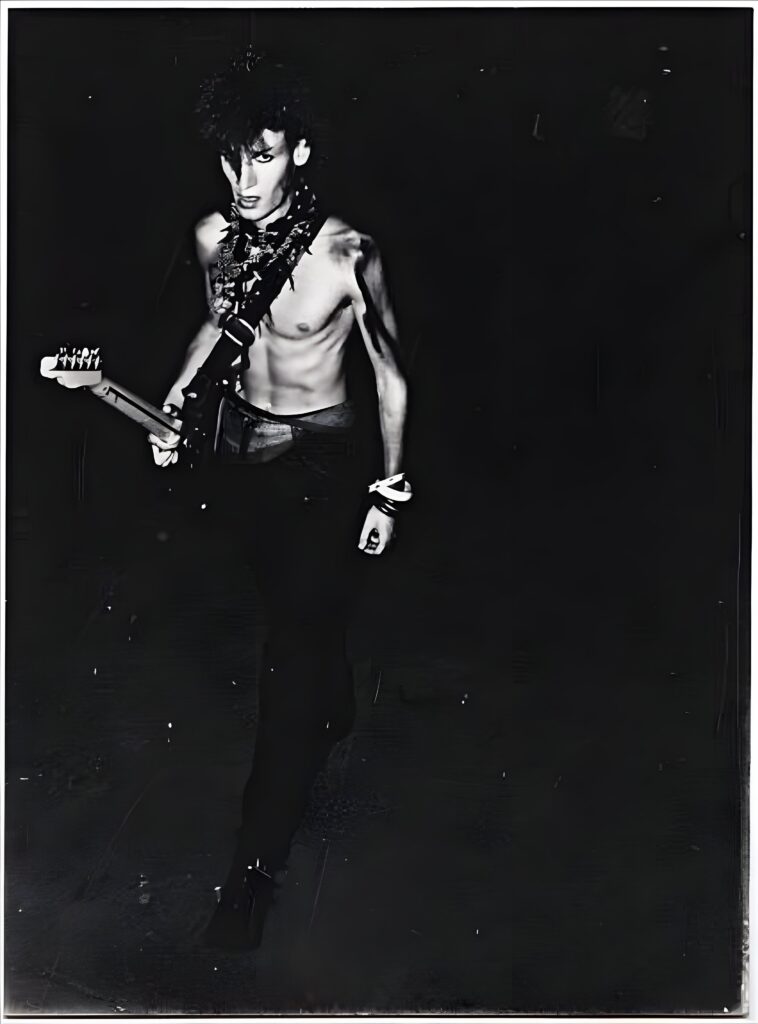
Daniel Ash: Pretty much. As soon as I had that guitar in my hands, I knew I had to get something going. My friend Kevin Haskins was already a drummer, so we were in the same circle. We played together as kids in various little school bands, but none of it was serious yet. My guitar was a Woolworth’s special, really hard to play, but it was mine. I didn’t take any lessons. I just tried to figure things out by ear, copying stuff off records. That was the beginning. In Northampton, there wasn’t much happening in the music scene, so you had to make your own thing. Kevin and I were joined later by David J, Kevin’s brother, and of course Peter Murphy. That was the real spark.
——Did you always know you wanted to be an artist?
Daniel Ash: I think deep down, yes. I always had that drive to create. But it really started to come together when I was about 16. I was very lucky that my parents supported me going to art school instead of forcing me into a so-called “normal” job. That was a huge break for me, because I absolutely hated regular school. I just couldn’t wait to get out of there — it never fit me at all. Once I got to art school, though, it felt like the right place instantly. Whether it was visual art or music, I felt connected to it on a deeper level, like I’d found my tribe. That environment made me realize I could build a life around creative expression, and from that point on I never looked back.
——What did you like most about art school?
Daniel Ash: The total freedom, without a doubt. There was this openness in the courses. Nobody was telling you what you absolutely had to do, so I could just explore. I’d stay behind until ten o’clock at night after everyone else had packed up, just painting and listening to records, completely immersed in it. It was the first time I felt a real sense of purpose. That freedom to experiment and get lost in your own headspace was priceless. It shaped who I am, really.
——Are you still into art?
Daniel Ash: I am. I still love art and I do paint from time to time whenever I can. But to be honest, these days I’m really obsessed with motorcycles. I live near a mountain range in Southern California, so I’m up there almost every day on the bikes, riding or working on them. That’s what takes up most of my time now — it’s a different form of freedom, I suppose. There’s something about the solitude of the mountains and the simplicity of the ride that keeps me grounded. It’s become a huge part of my lifestyle.
——We’ll circle back to that a bit later, if you agree.
Daniel Ash: Absolutely, no problem.
——Going back to your childhood for a moment. I think I read somewhere that you didn’t like your name growing up. Is that true?
Daniel Ash: No, I don’t think I ever disliked my name itself. But maybe what you’re remembering is this story: I had a nasty maths teacher at school who used to shout my name — “Ashhh!” — across the classroom in this really humiliating way. He was a horrible man. Just one of those teachers who tried to embarrass kids on purpose. So maybe it wasn’t the name I didn’t like — it was the way he used it. Anyway, I hated school. I had zero interest in what they were trying to teach, and even less in the structure of it all. The whole system just didn’t suit me. That’s why art school later on was such a relief — it was the first time I felt any sense of freedom. And freedom’s always been the key word for me. It still is. That sense of being able to think for yourself, to explore, to express — that’s what I needed. That’s when I started to feel like myself.
——I hated my maths teacher too (laughs).
So, you picked up your first guitar at around 15, and went straight into experimenting rather than technical learning. Why do you think you were more drawn to atmosphere and experimentation instead of the classic guitar-hero approach?
Daniel Ash: Well… Honestly? Because I found traditional shredding really boring. By the time I picked up a guitar, it felt like everything had already been done — and done better than I could do it. I mean, I loved Jimi Hendrix, but what’s the point in trying to compete with someone who was already a master? I just didn’t see any originality in copying that kind of playing. Also — and I’ve said this before — I was probably a bit lazy. I didn’t have the discipline or the interest to learn scales or technique in that academic way. That route just didn’t appeal to me. So, I went the experimental path because it felt more creative and more authentic to who I was. I never even considered doing it the normal way — I was just following what felt interesting to me.
The real turning point came when the E-Bow was invented. That little device changed everything. It basically turned the guitar into something closer to a keyboard — I could suddenly sustain notes forever, and that completely transformed the sound. I’ve used it a lot on this new Ashes and Diamonds record, actually. People might think they’re hearing synths or ambient pads, but in many cases, it’s all just E-Bow guitar.
Then, there’s Fernandes Guitars — a Japanese company that developed the Sustainer system, which works on a similar principle. It activates all the strings, so you can sustain entire chords and get this amazing controlled feedback that spans across multiple octaves. I used their guitars for years. Even now, I’ve got a Fernandes Sustainer pickup on my Telecaster, and it gives me exactly that — infinite sustain, complete control. That technology opened up an entirely new dimension for me. Suddenly the guitar wasn’t just a percussive or rhythmic instrument — it became this fluid, expressive thing I could bend and stretch like a voice or synth. It allowed me to step away from all the rock clichés and go off in my own direction. And that’s always what I’ve been after: something original, something that feels like mine.
——Why did you even start with the guitar if you didn’t really want it to sound like a guitar?
Daniel Ash: At first, I did want it to sound like a guitar — absolutely. My hero was Mick Ronson from David Bowie’s band. Still is, really. My favorite guitar solo of all time is the one at the end of Moonage Daydream. It’s perfect. What I loved about Mick was that he didn’t need to play a thousand notes. He could just howl on two or three notes, and it would say so much more than any shredder ever could. It felt raw, emotional — it hit me right in the chest. That’s the kind of playing that speaks to me. Shredding just never did.
——Shredding feels more like showing off to you?
Daniel Ash: Yeah, exactly. It’s all testosterone and ego (laughs) — just too academic. It becomes this exercise in cramming as many notes as possible into three seconds. It’s like ego-wanking, really. No soul, no feeling. I know heavy metal is massive, and some people love that style, but for me? It leaves me absolutely cold.
——Let’s jump back to 1978. You formed Bauhaus with your childhood friends Peter Murphy and the brothers David J and Kevin Haskins. Few bands arrive with such a fully formed aesthetic right out of the gate. Can you take me back to that debut — what was your mindset?
Daniel Ash: Peter and I went way back — we met at school when we were about eleven. Even then, we talked about starting a band someday. Honestly, I wanted to be in a band with him because he just looked incredible. He had this natural charisma and presence, and we were both completely obsessed with David Bowie, especially the Ziggy Stardust era. We were also into Roxy Music, T. Rex, Iggy Pop — that whole early ’70s glam scene really shaped us. As I said previously, I got my first electric guitar when I was about fifteen.
I remember Peter coming over to my house during lunch break while I was mucking about on it, and as we walked back to school, we said, “Let’s do it one day. Let’s start a band.” But then a few years passed — I went to art school, Peter ended up working in a factory — and life just moved on. Then one day, out of the blue, I drove over to his house, knocked on the door and said, “Do you want to start a band?” He said yes, straight away. That was it. He moved to Northampton, left his job, and within a few months the four of us — Peter, Kevin, David and I — were all living together under one roof. That’s when Bauhaus really started. I rented a classroom space and Peter and I went in with just a little amp, one mic, and my guitar. About fifteen minutes in, we had something. The moment I heard him sing — not just shouting like a lot of frontmen at the time — I knew. He had tone, control, real power. That was a turning point. I’d been in a couple of pub bands before, but this was the first time it felt like something real. Not long after that, we stepped into a studio for the first time and recorded Bela Lugosi’s Dead. That became the launchpad.
——It sounds like it came together naturally — even instinctively.
Daniel Ash: Yeah, completely. There was no big plan. We were just acting on instinct. Peter and I already had a strong bond — same background, same influences, same nightlife. One night in a pub I just asked him: “Want to give singing a try?” And he said yes. Right from the start, we were experimenting — with sound, lighting, visuals, atmosphere. We didn’t know what we were doing technically, and honestly, that was our strength. Because we weren’t trained musicians or studio guys, we weren’t restricted by rules. We did whatever felt good. Punk had started to fade by ’78. It had this raw, brilliant energy, but we wanted to go deeper — moodier, more cinematic. We kept the DIY attitude but took it somewhere darker, more atmospheric. That’s what became the essence of Bauhaus. Looking back, we didn’t fully know what we were creating — but we could feel it was different.
——How does it feel now, all these decades later, to see Bela Lugosi’s Dead become a goth-punk anthem — almost a genre-defining moment?
Daniel Ash: Has it (laughs)? I don’t think about it much, to be honest. That was in 1978-1979 — a lifetime ago. So much has happened since then: different bands, different records, different lives. I don’t dwell on the past. I don’t sit around analyzing how one song shaped anything. It’s nice to hear that it meant something to people though. But I’ve always been more interested in moving forward. That said, the recording of Bela Lugosi’s Dead was magical. It just came together instantly. The same thing happened with Love and Rockets’ So Alive and Go from Tones on Tail — all of those songs were written fast. There’s something special about songs that come together in a flash. They usually turn out to be the best ones. But no, I don’t want to get stuck in the past. That chapter was great, but I’ve kept going — that’s what matters to me.
——Why do you think you are able to write songs so quickly?
Daniel Ash: Sometimes it happens fast, and sometimes it doesn’t — there’s no formula. But I do think it starts with a natural creative instinct. Some people are just wired that way. That said, writing music is not easy. People assume making music is effortless — it’s not. Writing experimental or obscure stuff, sure, anyone can do that. But writing a great three-and-a-half-minute pop song? That takes real talent. A hit that actually connects with people — that’s hard. I know some people don’t like to hear the word “commercial” but it just means people like it. It resonates. It sticks. Anyone can make noise and call it art, but crafting something people actually want to hear — something that moves them or stays in their head — that’s a real skill. Honestly, I wish I’ve had more hits. Anyone who says they don’t care about success is a liar. That whole “I’m too cool to want hits” thing? Total nonsense. Everyone wants to be heard and understood. That’s the point of creating — to communicate something, and have it land.

——I think it’s the ego protecting you from rejection in advance. You say you don’t care because if it fails, it’s easier to handle — it feels less personal. But really, everybody wants recognition for what they do. That’s why social media works so well — it feeds that deep need for validation and acceptance.
Daniel Ash: Exactly. That’s exactly that! People want and need connection. Social media is just the modern version of something ancient — the need to feel seen, validated, understood. We pretend we’re above it, but we’re not. Artists are no different. When you release a song, it’s not just about making something for yourself. It’s also about hoping it lands with someone — that it moves them or means something. You’re putting a part of yourself out there and hoping people connect with it. It’s not about selling out — it’s about being accepted. When people say they don’t care if their work connects? I don’t buy that. You put it perfectly, that’s just self-protection. Deep down, all artists want their creativity to be recognized. I certainly did. I still do. I wish I had more success.
——You don’t feel successful enough?
Daniel Ash: Yeah… I’ve never felt that successful. I’ve always been in what you’d call indie or alternative bands. I am not rich. I don’t make lots of money being an artist. I have had some critical acclaim with my bands, sure — a strong, loyal fanbase, I believe — but never real mainstream commercial success. We didn’t make much money with our work and that’s frustrating. I would’ve liked more success. Who wouldn’t? Some artists act like they’re above that, but I’m not one of them. I am not above validation and acceptance. From day one, I wanted my music to reach more people. I wanted to make hits. I have zero shame in saying that. There’s something beautiful about seeing your work click on a massive scale. I was watching early Oasis footage the other day — those stadium crowds, the energy, the shared experience — and I thought, That’s amazing. I’ve got a lot of respect for artists like Taylor Swift too. What she’s done, the scale of it, is incredible. I love that. The bigger, the better, as far as I’m concerned. I wish I had the talent to reach larger audiences. I would’ve liked more recognition, more success — and yeah, more money too. I’m only human. But it is what it is. I’ve made peace with it. I still create. I still ride. And I enjoy my life.
——I am glad you do.
Bauhaus took its name from the German art school, and minimalism was a big part of that aesthetic. Is minimalism still important to you today?
Daniel Ash: Absolutely. Minimalism is still at the core of how I approach music. For me, overly complicated music leaves me cold. Take bands like Genesis or a lot of the prog-rock from that era — yes, it’s technically impressive, but to me, it’s complicated and yet completely boring. It doesn’t move me. I’ve always been drawn to the raw simplicity of early rock and roll from the 1950s. That primal, stripped-down energy — three chords, strong feeling, no frills — there’s something timeless about it. That same minimalist spirit was central to Bauhaus too. There was nothing particularly clever or intricate about what we were doing musically. It was direct. It was powerful. And that simplicity made it resonate more deeply. The Bauhaus art movement itself was based on minimal, functional design — getting rid of excess — and I think that philosophy naturally carried over into my music. Even now, I’m more interested in what a piece of music feels like than how complex it is. I want it to hit you emotionally, not intellectually. That’s what I’m always chasing. Something stripped back but emotionally strong.
——In 1984, you formed Tones on Tail with Kevin Haskins (Bauhaus).
Daniel Ash: Yeah, that’s right. Originally, it was just Glenn Campling on bass and me — Kevin joined about six months or a year later. Tones on Tail was definitely one of my favorite periods. In the beginning, with just Glenn and me, it felt incredibly free. We had total creative control. The record company trusted us completely — they didn’t try to interfere or steer us in any direction. I’d literally just call them and say: “I’m going into the studio tomorrow” and they’d fund it without any questions. I’d finish a track, hand it over, and that was it. That kind of freedom is rare, and it allowed us to really experiment. My goal with Tones on Tail was to create music that sounded like it came from another planet — something alien and unpredictable. And I think we pulled that off. Even now, when I listen back, it still sounds fresh. It could’ve been recorded last week. I’m really proud of that.
——Why did it come to an end?
Daniel Ash: There were issues with Glenn. His attitude started to shift — success went to his head, at least from my perspective — and I found that really difficult to deal with. So, after one album and a couple of tours — one in the UK, one in the U.S. — I decided to stop. That was it for me. After that, I moved on and started Love and Rockets with David instead of Glenn. It was a shame, because we had achieved what I set out to do with Tones on Tail, but for me, the people you work with matter more than the work itself. If I don’t like someone’s energy or attitude, I simply can’t work with them. That’s the truth. Honestly, that’s why most bands fall apart. People always talk about artistic differences, but really it comes down to personality. When you’re working in a group of creative people, you’re all changing, evolving, and you don’t always want the same things at the same time. That misalignment can be fatal. Egos get in the way too — and no one wants to stay in the same place artistically. Just look at how many bands from the ’60s are still together. You can count them on one hand — maybe The Rolling Stones, maybe The Who — that’s about it. Most bands don’t last, not because the music isn’t good, but because human nature makes it difficult. Creativity is intense. You want to grow, but everyone grows differently.
——Yes, I think “artistic differences” actually mean “we can’t stand each other anymore” (laughs). What were you hoping to explore with Love and Rockets that was different from Bauhaus and Tones on Tail?
Daniel Ash: Every band has its own chemistry. Change one person, and everything shifts — the energy, the sound, the direction. Take Bauhaus: if you remove Peter Murphy from the equation, you get something entirely different. Then with Tones on Tail, it was Glenn Campling on bass instead of David J., and again, it became its own unique thing. Swap Glenn out, bring David back in, and suddenly you’ve got Love and Rockets — completely different feel, different sound. It’s the same with Ashes and Diamonds, my current project. Now I’m working with Paul Denman on bass and Bruce Smith on drums — and again, it’s a totally new sound. That’s what keeps it exciting: every lineup creates its own alchemy. That said, forming a band is never easy.
Ashes and Diamonds is actually my fourth band. It even took us three years to agree on the name! We’d finished the album and still didn’t have a name. Three years went by while making it, and still nothing. One day, Paul pulled out a notebook and started reading through a list of names he’d jotted down, and as soon as he said “Ashes and Diamonds” I thought, that’s it. Amazingly, all three of us agreed — which was incredibly rare. After three years, we finally had the band name. It felt like something out of a comedy sketch, but that’s how it goes (laughs). The difference with a band is that you have two or three creative people working together, and that makes for better music than doing a solo album, in my opinion.
——That’s interesting. Can you expand on that?
Daniel Ash: Sure, absolutely. With solo work, you have total control. That sounds great — and in some ways, it is. You can move quickly, make all the decisions yourself, and there’s no one to argue with. I’ve always been a bit impatient, so that kind of freedom can be really appealing. But the truth is, over the years I’ve had to face something a bit uncomfortable: my best music usually comes from collaboration. It’s hard to admit that, because part of you wants to believe you can do it all on your own. But when I look back, the strongest work — the stuff that really connected — has always come from bands. There’s just more electricity when you’re bouncing off other people. More texture, more tension, more surprises. Even though my solo work has solid structure — verse, chorus, bridge — it never quite lands the same. I’ve never had commercial success as a solo artist, and I don’t think it’s because the music’s too experimental or weird. It’s just that something essential gets lost without that group dynamic. So yeah, bands can be difficult — egos, timing, all that — but when the chemistry is right, there’s nothing like it. That’s why I keep going back to it.
——Is that what led you to form Ashes and Diamonds?
Daniel Ash: Exactly. That’s really what it came down to — realizing I can’t do it all alone. I need that outside energy, that friction, to get the best results. That’s why I asked Paul Denman from Sade and Bruce Smith from Public Image Ltd. to join. They’ve both been through the fire of real commercial success. They carry a kind of confidence that only comes from experience — they don’t second-guess themselves, and that pushes me to rise to that level too. Of course, it’s not always easy. It actually took us three years just to agree on the band name (laughs)! But honestly, that kind of push-and-pull is part of the creative engine. It forces you to refine your ideas, to confront blind spots. You don’t get that when you’re working entirely solo — there’s no one to challenge you. I look at someone like David Bowie — he was technically a solo artist, but he always brought in incredible collaborators. Everything still orbited around his vision, but he had the talent to hold that center. I admire that massively. But I’m also realistic. I don’t have that kind of gravitational pull. I’ve had to rely on the chemistry with others to get somewhere meaningful. That’s not weakness — it’s just knowing what works for me.
——You’re being hard on yourself…
Did you learn anything new while making this Ashes and Diamonds album?
Daniel Ash: If anything, I’ve learned that no band — no matter how long you’ve been doing this — is ever smooth sailing. Every setup comes with its own set of challenges. Someone asked me recently, “After all these years, have you figured it out?” And my honest answer was no. I haven’t figured anything out. Every band has its own problems — they’re just different flavors. It was the same in Bauhaus, in Tones on Tail, in Love and Rockets — and it’s no different now. Creative friction, scheduling conflicts, personality differences — it’s always there. But I’ve stopped expecting things to be perfect. That was probably the biggest shift. You learn to stop chasing some ideal version of a band and start focusing on how you move through the mess. Because that’s where the art comes from. The struggle is part of the process. If everything were easy and harmonious all the time, the music would be flat. The breakthrough comes in working through the tension. That’s what gives it life. It’s no different than a personal relationship — the strength comes from how you navigate the differences, not from avoiding them.
——Any relationship, including romantic relationships, works that way. Issues are inevitable and that’s OK, we are all so very different in the end. What matters is how you move through these issues that matters.
Daniel Ash: Yes! Exactly, exactly that.
——Let’s talk about Ashes and Diamonds a bit more.
Daniel Ash: Sure. The album’s called Ashes and Diamonds Are Forever. It’s a bit of a wink — a play on Diamonds Are Forever, the James Bond thing. Kind of a joke, but also a good title. And yeah, I’ll definitely make sure you get a copy of the record when it’s ready. Be sure to follow us on Instagram and YouTube!
——Thank you.
With Ashes and Diamonds, are you singing lead vocals?
Daniel Ash: Yeah, I’m doing lead vocals, playing guitar, and throwing in a bit of saxophone here and there. Paul’s on bass, Bruce is on drums — so it’s a tight three-piece.
——When you’re the lead vocalist, does that feel more personal or creatively fulfilling?
Daniel Ash: I actually get a huge kick out of singing — more than people might expect. Everyone tends to associate me with the guitar because of my work in Bauhaus and Love and Rockets, and that’s fair, but over the years, singing has taken on a much deeper meaning for me. What’s funny is, I don’t particularly enjoy the process of songwriting. Writing lyrics and building a track from scratch — that’s hard work. It can be draining. But once the song is there, and I step up to sing it — especially when it’s my own words — that’s where the real satisfaction kicks in. I never sing lyrics written by someone else, unless it’s a cover. I have to feel what I’m saying. It has to come from a real place emotionally, otherwise I just can’t connect with it. And when I do connect, when I hit that vocal take and I know I’ve nailed the feeling — that’s a much bigger high for me now than even playing guitar. There’s something raw and immediate about singing that I didn’t fully appreciate earlier in my career. Now, it feels like the most direct line to expressing who I am — no effects, no pedals, no gear in between. Just my voice and the emotion behind it. That’s where I feel the most alive creatively these days.
——You’ve said writing lyrics isn’t your favorite part. Is it more about vocal expression for you?
Daniel Ash: Yeah, lyrics don’t come very naturally to me — they definitely take more effort than the music does. But over time, I’ve grown to enjoy the challenge. I often use the cut-up method, like what David Bowie did or William Burroughs before him — slicing up magazine headlines or bits of text, then rearranging them to create something unexpected. It’s a kind of organized chaos, and I love that it bypasses the logical, conscious mind. You stumble on phrases you’d never come up with deliberately, and sometimes those weird, random combinations end up being the most powerful. It’s like the subconscious starts writing for you. You begin with fragments, no clear meaning, just raw pieces — and then, suddenly, something starts to emerge. A kind of hidden thread pulls it all together. And even if you didn’t set out to write about yourself, it becomes personal without you realizing it. It reminds me of magnetic poetry — you know, those little word magnets people stick on their fridges. You play around, move them around, and then suddenly a sentence appears that just hits you. That’s what it’s like. Watching David Bowie use that method in Cracked Actor really stuck with me — it opened my eyes. And Burroughs’ whole philosophy — that you don’t have to start with a clean slate — that chaos can be the starting point — that completely changed how I approach writing. You can take scraps, rearrange them, and still say something real.

——You also mentioned having a glass of wine to loosen up creatively. Can you explain how that plays into the process?
Daniel Ash: Yeah — a couple of drinks definitely help me switch off the analytical part of my brain. I stop second-guessing everything. I stop judging ideas before they’ve even had a chance to grow. That’s when creativity can actually breathe — when you’re not filtering or controlling it so tightly. Of course, there’s a fine line. If you go too far, it all just falls apart. But with just the right amount, I can tap into something more instinctive, rawer. A little alcohol almost acts like fuel — it gives me energy, lowers my inhibitions, and gets me out of my own way. I actually think alcohol can help with music — in moderation. But it’s not a universal tool. When I’m painting, for example, it’s the opposite — alcohol completely ruins it. I need to be totally sober for visual art because it requires a sharper kind of focus and clarity. With music, there’s more room for chaos. It welcomes that looseness. That said, I’ve definitely had nights where I’d scribble down lyrics after a few drinks, feel inspired in the moment — and then wake up the next morning, read them back, and go: “oh no…” (laughs) – Straight in the bin. I wrote very embarrassing things (laughs). You’ve got to know when to stop. The trick is to use it just enough to loosen the grip — not to lose the wheel entirely.
——Let’s continue with your creative process. You’ve said before that ego can get in the way of good songwriting. What did you mean by that?
Daniel Ash: Ego is that inner voice that urges you to impress — it wants to prove something in guitar playing, it shows up as shredding or overplaying — just stuffing in notes to say: “Look what I can do.” But the truth is, that kind of playing doesn’t say anything emotionally. It’s impressive, sure, but it doesn’t move you. It’s more like an academic exercise — technique for technique’s sake. You can’t connect with people if you’re hiding behind performance or polish. Sometimes, it’s one simple note, played at the right moment, that cuts the deepest. That takes restraint. That takes intention. And honestly, ego isn’t always loud — sometimes it’s subtle. It can sneak in as perfectionism, or that fear of being judged. Suddenly you’re second-guessing everything, or trying to make something sound impressive rather than honest. That’s where creativity starts to die. You have to be willing to let go of control, to let something raw come through. It’s not about dumbing it down — it’s about stripping away the noise so something real can come out. That goes for writing lyrics, producing a track, even just coming up with a riff. The less ego’s in the room, the more space there is for truth. And that’s what people actually respond to — not how many scales you can play, but whether it makes them feel something.
——I completely agree. Technique can be a shield — a way to hide behind skills rather than expose your inner world. Almost like a battle of intellect over feeling. Where do you see your sound evolving next?
Daniel Ash: Yeah, exactly — technique can be a kind of armor. And that’s fine sometimes, but if you’re not careful, it blocks the heart. As for where my sound’s going, honestly, I’ve never wanted to be boxed into anything. Curiosity has always been my main driver. I still want to explore — whether that means more electronic textures, stripped-down acoustic stuff, lush guitar atmospheres, or something totally unexpected that hasn’t even occurred to me yet. The moment you think you’ve arrived as an artist, the creative spark starts to die. For me, it’s about staying hungry — keeping that sense of discovery alive. I still want to be surprised by what I make. If I can surprise myself, there’s a good chance I’ll surprise someone else too.
——Last year, Love and Rockets toured North America. It seems like the band has always had more traction in the U.S. I couldn’t help but notice that you, David J., and Kevin all ended up living in Los Angeles — while Peter moved to Turkey. It almost feels like Bauhaus found its core audience in Europe, while Love and Rockets resonated more in America. Have you always been more drawn to the American market?
Daniel Ash: That’s actually a good observation. Bauhaus did have success in North America — especially toward the end — but yes, we were definitely more commercially successful in Europe and the UK. Love and Rockets, on the other hand, never really caught on in England. Our audience was almost entirely in North America. That’s where we got airplay, where we charted, where we played to packed crowds. England just never embraced it in the same way. People there seem to gravitate more toward Peter’s solo work — they prefer his voice, maybe because it feels more in line with the post-Bauhaus aesthetic. Meanwhile, American audiences seemed open to both — they didn’t draw such strict lines. Love and Rockets really found its home through college radio in the U.S. That underground scene was so powerful back then — it supported us in a way nothing in the UK did. We were signed to Beggars Banquet, and they released our records simultaneously in both countries, so it wasn’t a label issue. It just didn’t connect in the UK. It’s one of those mysteries you see with other artists too. Like, Kylie Minogue is absolutely huge in the UK and Australia, but never broke through in America. It’s just one of those things.
——Do you think that’s down to cultural differences? Promotion issues? Or just random luck?
Daniel Ash: You tell me (laughs)! I wish I knew. If anyone had the answer to that, they’d have global success on tap. It’s something I’ve asked myself many times — why does one project resonate deeply in one country but not at all in another, even with the same material? I don’t have a clue. There are always theories — accents, production style, timing, cultural references — but at the end of the day, it’s unpredictable. Sometimes it just happens. You can put the same amount of effort, passion, and money into two different projects, and only one connects. That’s the nature of the music business. And yeah, of course, I would’ve loved broader success — who wouldn’t? But I’ve learned to appreciate where the support is. As long as people somewhere out there are listening, you’ve got a reason to keep going. Still, more global recognition would have been fantastic.
––Let’s hope Ashes and Diamonds will get traction worldwide.
Let’s move on to your visual identity and Japan. How important is your visual identity — including stage outfits and makeup — to you as an artist?
Daniel Ash: Well, I think it’s pretty obvious, isn’t it (laughs)? I’ve never been the type to walk on stage in jeans and a T-shirt, staring down at the floor while I play. I find that incredibly dull — both to do and to watch. I’ve always felt strongly that when you walk on stage, you’re creating a moment, a world. And that world needs to be seen as much as it’s heard. Visual identity isn’t just decoration — it’s part of the message. It says something about who you are before you play a single note. I’ve always loved artists who created a strong sense of theater: David Bowie, Roxy Music, even punk bands in their own way. They weren’t afraid to make a statement the moment they walked into a room. I grew up with that, image and sound belong together. Personally, I just don’t come from that “jeans and trainers” planet. It’s never been in my DNA. I want to give something when I’m up there — mystery, character, a feeling. You don’t have to go full costume, but there has to be a point of view. And it’s not about vanity — it’s about atmosphere. If you’re offering people a chance to escape for 90 minutes, then I think you owe them more than just the bare minimum. It has to be transportive visually and musically.
––I completely agree. My media is called Visual Music for a reason. And since it’s based in Japan, I wanted to make that connection — because a lot of Japanese musicians put an incredible amount of care into their look. And some of them — especially guitarists — have cited you as an inspiration. Do you feel a connection to that?
Daniel Ash: Not at all, to be honest — but I’m really, really, flattered to hear that. That’s great. That really fills my heart. Are we talking about underground artists or bigger names?
––Both. But in terms of big names — when I was preparing this interview, I found that hide from X-JAPAN and Imai from BUCK-TICK have both mentioned you as a source of inspiration, particularly for your style and the way you experiment with guitar sound.
Daniel Ash: Oh, wow! I had no idea about that — that’s amazing to hear. Thank you for telling me. I’m genuinely moved by that. I’ll definitely go check their work closely. Sometimes you make creative choices that feel instinctive or even risky — and you wonder, does anyone get this? And then, years later, to hear that it resonated with musicians halfway across the world — that’s a beautiful surprise. It makes all the weird risks worth it. It also reminds you that music doesn’t really have borders. It reaches people wherever they are. And that’s a powerful feeling.
––Let’s talk about your lifestyle and your love for motorcycles. On the Freedom I Love album cover, your latest work, released in 2017, you posed with your bike. Does riding inspire you?
Daniel Ash: It does, greatly. I’ve loved bikes ever since I was about twelve. My dad had Lambretta scooters, and I’d sneak out on those around the neighborhood. The day I was legally old enough to ride a motorcycle, I was on one. From about 16 or 17, I’ve always had a bike on the road. Living near the mountains now means I can get out of the city every day if I want. I really appreciate that solitude more and more as I grow older. Riding has been part of my life since I was twelve years old. It’s more than a hobby — it’s how I stay mentally balanced. I never go for a walk, I don’t swim, I don’t do yoga, I don’t meditate — I ride bikes. Every day, if I can. It’s the one thing that resets me. If I’m feeling low, anxious, depressed, or just scattered, a long ride puts me right again. Some people might find peace in nature or through exercise.
I love all kinds of bikes. I was kind of narrow-minded before about Japanese bikes, but I’ve got some Kawasakis and Suzukis. I love the newer models. I’ve got a Hayabusa. Hayabusa means “falcon” in Japanese, doesn’t it? Well, it’s a crazy powerful bike — fast as anything. Anyway, that’s passion talking (laughs)… For me, it’s two wheels and a road. It forces me to be present fully — and when your brain is wired like mine, a bit scattered, that’s a gift. On a bike, you can’t be distracted. You have to focus on the road, the speed, the rhythm of the engine. Everything else just… drops away. There’s this phrase I always use — “blowing away the cobwebs.” That’s what it feels like after a ride. You come back with a clean mental slate.
——I don’t ride motorcycles but I like taking my bicycle for a ride. It clears the mind, so I can understand the feeling you are describing.
Daniel Ash: It’s the same thing — two wheels! If you’re alone on a bicycle, it gives you a very similar feeling. Of course, with a motorcycle you can travel much larger distances thanks to the engine, but the essence is the same. Even riding a bicycle is better than just standing still. It’s good for relaxing and it’s great exercise, too. I’ve seen how powerful it can be — not just for me, but for others. There’ve been times when friends were in a really bad headspace — depressed, angry, stuck. And I’ve taken them out on my bike, on a 100 or 200-mile ride, and I’ve watched it change them. They come back different. Lighter. Clearer. I’m not exaggerating. It really can be that therapeutic. It’s like motion shakes off the mental heaviness. Sometimes I wish I could’ve done that for people I didn’t even know.
There are many artists who died by suicide, being depressed and stuck mentally. If I could’ve just taken him out on a ride, maybe things would’ve felt different for a while. You never know. But I believe in the healing power of movement and freedom. As I said, I’m scatterbrained as a human, not organized in my head, so when I ride a bike, it forces me to concentrate on one thing. It keeps me focused. It’s just very, very healthy for me personally. It keeps me sane, basically. Otherwise I’d be a real mess. It’s very, very good for any kind of depression. Some people go for a walk or walk the dog or climb a mountain or go swimming — I don’t do any of those things. I think regular movement improve depression or anxiety symptoms enough to make a big difference!
——It does! I think depression comes from us being disconnected from ourselves — from our basic needs. And movement is one of them.
Daniel Ash: Yeah, I really believe a lot of modern depression comes from disconnection — from our own bodies, from nature, from each other. We’re glued to screens, sitting still all day, overstimulated but under-experienced. Riding is the exact opposite of that. It’s physical. It’s real. It grounds you. It brings you straight back into the present moment and into your senses. The wind, the engine, the road — even the risk — it all reminds you that you’re alive. When people ask me what keeps me sane, I say motorcycles. For me, it’s like Zen for people who can’t sit still. And 95% of the time, I ride alone. That solitude is important. No waiting around for other people, no distractions — just me, the bike and my thoughts. It’s the total opposite of being stuck in a traffic jam, both physically and mentally. Like John Lennon said: “You’ve got to be free.” And I completely agree.
——So, would you recommend riding to anyone struggling with depression?
Daniel Ash: Yeah, absolutely. Especially these days. I know it’s a huge issue in Japan — with internet addiction and isolation. It’s happening everywhere, but Japan seems to have it particularly bad. You’ve got kids who are so glued to their computers they won’t even get up to go to the bathroom. That kind of addiction is dangerous. People are malfunctioning as human beings because of this high-tech culture that’s completely taken over.
And now, there’s AI — which honestly scares the hell out of me. It’s accelerating so fast. People are already becoming addicted to it — asking AI for everything, relying on it for every answer. I’ve seen people close to me getting hooked. It’s seductive. That’s what’s terrifying — the way we’re handing over our thinking and creativity to machines. Sure, AI has some positives. But the negatives are massive. The pace is extreme. I don’t think this is something that’s 10 years away — I’m talking five years, maybe even less. In the last 18 months alone, it’s advanced at a frightening speed. Look at visuals: they used to be crude, and now they’re unbelievably sophisticated. Give it another year or two, and no one’s going to be able to tell what’s real anymore. And I hate that. I really do. It’s going to completely distort our sense of reality. Think about it — a world leader could appear on screen saying something outrageous, and it might not even be them. It could be fake and we wouldn’t know. That’s terrifying. Anyone with power could be impersonated, and the average person won’t be able to tell the difference. That kind of manipulation is going to cause total chaos. And what is that going to do to a ten-year-old kid? Or a teenager? Or even a young adult? I honestly don’t know how they’re going to handle it.

——I agree.
It really does feel like technology is controlling people, instead of the other way around.
Daniel Ash: Exactly. Technology is supposed to serve us — not control us. But right now, it’s the other way around. And I don’t think society is ready. I think it’s going to create massive confusion — and probably a lot of anger and violence, because people won’t know what’s real anymore. It’s going to be very difficult, especially for younger generations who’ve never known anything else.
——Still on the topic of your lifestyle — what made you move to LA?
Daniel Ash: I basically moved to LA for the motorcycle culture (laughs). I’ve been here since 1994. The weather is perfect for riding — the sun, the roads, the space — it all just fits my lifestyle. I ride every day, and that’s something I couldn’t do in England. I still go back every few years, mostly because I have to renew my visa. That’s been the case since the 1980s. I’ll visit family when I’m there, but I don’t go back often. LA really feels like home now.
——So, you have family in the UK?
Daniel Ash: Yeah, my mother and brother live in the UK. My mom is 98 years-old now. Mentally, she’s still sharp, but physically, her body’s not keeping up. My dad passed away in 2002 — they had a long, beautiful marriage. It’s been hard on her since he died. My younger brother looks after her now. Her birthday’s coming up soon, actually.
——A happy marriage, a rare thing (laughs)…
I noticed it’s your birthday month too while preparing this. So, Happy birthday to you both.
Daniel Ash: A happy marriage is indeed very rare. Thank you for the wishes (laughs). My mom’s birthday is on the 28th, and I’m on the 31st. She’s actually French.
——Oh! Then, we have something in common.
Daniel Ash: My God! — are you French? I thought you were Japanese or maybe Eurasian. Your English doesn’t sound French at all. Actually, your intonation sometimes sounds Japanese-ish.
——Does it? I’ve been living in Japan for too long (laughs).
Daniel Ash: Well, that’s not a bad thing though, is it?
——No, it’s not.
Daniel Ash: So, you immigrated in another country too. When did you move to Japan?
——Ten years ago. You, on the other hand, have kept your British accent.
Daniel Ash: Yeah, right (laughs). I’ve kept it intact.
——Was that intentional?
Daniel Ash: Not consciously, but I think subconsciously, yeah — I probably wanted to keep it. My mum, who’s actually half-French and half-Belgian, has a really strong French accent. You can tell straight away where her roots are.
——Did she speak French to you growing up? Do you speak it yourself?
Daniel Ash: A little, but I’m really rusty now (long pause)… You’re not going to make me speak French, are you (laughs)?
——I’m not (long pause)…
Daniel Ash: Ahh… Je parle un peu, mais I’m too rusty. I used to travel to France a lot on my bike. I loved taking the back roads, going through small villages instead of highways. Did that for years — it was fantastic. I used to go every summer with my then-girlfriend — we’d ride from London to Dover, cross to Calais, then avoid the highways completely and just explore. And that’s another reason I’m still in LA — the weather here is unbeatable for riding. It hardly ever rains. It’s the best place on the planet if you ride bikes. That’s why I’ve stayed all these years — I ride every single day. You just can’t do that in England. How’s the weather like in Japan?
––Japanese summer is long, hot and very humid. It feels very uncomfortable outside.
Daniel Ash: I didn’t know it was extreme like this. I couldn’t live in that humidity. It’s very dry here in LA. I could not live in a humid climate. I need to be outside and breath. I have a friend who married a Japanese woman and they moved from Los Angeles to a village somewhere in Japan about four months ago. I know it suits him to live in Japan more than in the States. He was born in England but pretty much grew up in California. He rides vintage Harley Davidsons and has friends in Japan who also ride vintage Harleys. I hope he finds it OK to ride under that humidity…
––I think it’s difficult for everybody…
Talking about coming to Japan, would you ever consider touring here?
Daniel Ash: Here’s a real question for you — and be honest — do you think the fact that I’m in my 60s now would be a problem in Japan? Would people just think I’m too old?
––I don’t think so. Japan has a lot of respect for veteran artists. For example, BUCK-TICK kept selling out venues until very recently, even after their beloved frontman passed away. If the music connects, people come. Ageism exists, but not so much for men.
Daniel Ash: I’d love to tour Japan. I’ve never done a proper tour there, and honestly, it’s something I’d be genuinely excited about. Not just because of the audience, but because the culture really seems to value artistry — not just the music itself, but the whole creative package: the aesthetics, the visual style, the atmosphere. If there’s interest, if there’s an audience who still wants to hear what I do, I’d embrace it completely. It would mean a lot to me, actually. I still have so much creative energy and passion. I’d love to bring that to Japan if people are open to it.
––We hope to see you perform here in Japan then.
I don’t want to take too much of your time. I heard you prefer phone calls over texting, so let’s end on a light note and play a game.
Daniel Ash: Actually, I got hooked on texting about seven or eight years ago. I started because it was convenient — I got my first iPhone then and realized my life had changed. For years, I resisted emails and texting. People used to joke I was sending smoke signals! But eventually, I gave in. Technology should be used wisely, though (laughs). It’s incredibly convenient, but also very addictive. So, what game do you have in mind?
––This or That.
Daniel Ash: OK. Let’s play!
––Motorcycles or guitars?
Daniel Ash: Motorcycles.
––Live gigs or studio work?
Daniel Ash: That’s a tough one. Honestly, I don’t particularly enjoy either process — the day-to-day of working in the studio or the grind of touring — but I love the finished result. Being stuck in the studio can feel tedious and frustrating, but hearing the final product makes it all worthwhile. Touring, on the other hand, is exhausting. I’m not as keen on long tours as I used to be. I might do a few select shows here and there, but the nonstop travel, the stage setup, the constant preparation — all of that is hard work and takes a toll on me. That said, I do enjoy playing live; the energy from the audience and the moment itself is something special. It’s just the behind-the-scenes that’s challenging.
––Silence or background music at home?
Daniel Ash: Silence.
––Netflix at home or going to the movies?
Daniel Ash: Netflix at home.
––Sunset or sunrise?
Daniel Ash: Sunset — I’m not up for sunrise (laughs).
––Night owl or early bird?
Daniel Ash: Night owl.
––Boredom or doom scrolling?
Daniel Ash: Neither… That’s a hard one. I don’t know (laughs).
––Thank you very much for your time. I wish you the best with your new album coming out, Ashes and Diamonds are Forever, in October.
Daniel Ash: Thank you, Mandah. I am really excited about this new release and band. I’m looking forward to your honest review. I hope people will like it as much as I do. Please look forward to it. This work means a lot. Thanks!
__________________
Mandah FRÉNOT
(c) VMJ
NOTE I:
Ashes and Diamonds will release their debut album, Ashes and Diamonds Are Forever in October (2025) via Cleopatra Records [PREVIEW].

NOTE II:
All photographies used in this article were sourced from Daniel Ash’s official Facebook page.
⩺ OFFICIAL FACEBOOK | HERE
⩺ OFFICIAL INSTAGRAM | HERE
⩺ OFFICIAL X (ex-TWITTER) | HERE
Thank you so much for this inquisitive, thoughtful interview. I’ve been a fan of all of Mr. Ash’s iterations, but to read about them so in much depth is fascinating. I love the way the interviewer draws a thread from meeting his first band mates to finding inspiration with his current endeavor with Ashes and Diamonds.
Something tells me if I ever the met him it would be awkward, as I have no knowledge of motorcycles or the creative writing process. But he also seems like the type of person you could have a couple drinks with and talk about anything. Thanks Daniel…for everything, including the Bubblemen!
Thank you so much for reading the interview, taking the time to leave a comment and your kind words – it means a lot! I am really glad this conversation resonated with you.