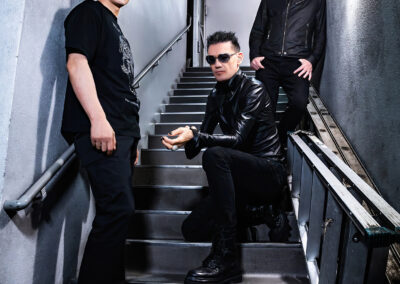
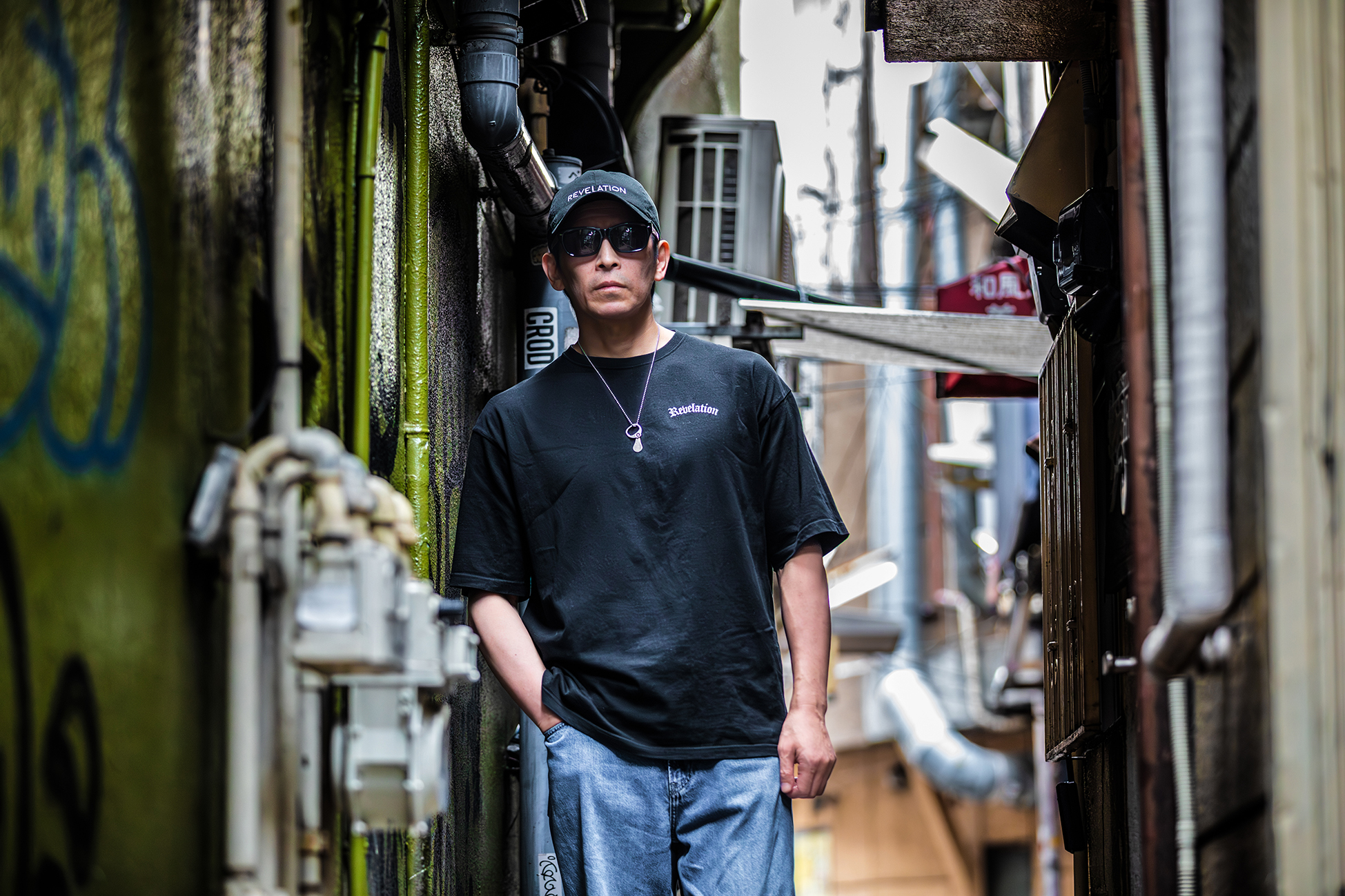
When your physical base is solid, it brings mental ease too. You don’t just get stronger—you gain space in your head. You can think more clearly, make better decisions, and stay calm even when things get tough. –– Motokatsu
Miyagami Motokatsu has been behind the kit for over three decades, navigating the Japanese rock scene, indies and mainstream, with a style defined by accuracy, weight, and instinct. From his breakthrough with THE MAD CAPSULE MARKETS to the shadowy textures of SCHAFT with Imai Hisashi (BUCK-TICK), Maki Fuji (Soft Ballet) and KA.F.KA with ISSAY (DER ZIBET), Ken Morioka (Soft Ballet) and Masami Tsuchiya, his career has been less about following a straight line than about throwing himself into projects that challenged both him both personally and professionally.
Raised in Tokyo with what he calls a wild childhood, Motokatsu felt the jolt of music at age ten, an encounter that set him on a path of discipline and relentless drive. His story runs through the hunger of his indie years, the turning point of a major debut and overseas recognition, and the constant reinvention that keeps him moving forward. In our conversation, he speaks plainly about the moments that shaped him, the collaborators who left their mark, and the role of physical training in sustaining a life built on rhythm. He also looks ahead to new ventures, including his long-held dream of launching a fashion brand, Revelation. This is not just a career retrospective, it’s a portrait of an artist still in motion, still restless, and still finding new ground to break.

⩺ EXCLUSIVE PHOTOSHOOT | HERE
——Thank you for making time today for this interview with VMJ. I’d like to start from your childhood and move step by step through your career, up to your more recent work. How does that sound?
Motokatsu: Great! Of course, no problem.
——What were you like as a kid?
How would you describe the environment you grew up in?
Motokatsu: The first thing that comes to mind is my brothers. There were five of us, all boys, and I was the second. That kind of household makes you tough right away. I always say I grew up wild (laughs). We were outside every single day until it got dark, running around, playing games, climbing things, never sitting still. We grew up in Nakano (Tokyo), which had plenty of energy in the streets. I used to play with my friends at the park and then, went home, and I still had my brothers to play with. The fun never stopped. That bond is still there today — we’re close even as adults. Outside of that, I was always into sports. I played baseball until the first year of junior high, and I practiced karate seriously until I was about 27, when an injury forced me to quit. So my childhood was very active — whether it was sports, martial arts, or just being outside until the sun went down. Always moving, always using my body.
——Looking back, you must have many cherished memories from your childhood. Was there music in your home growing up? Did your parents or siblings play at all?
Motokatsu: Not at all. In fact, I was the only one in the family who became an artist. Everyone else took a more ordinary path, working for companies, living stable lives. Music wasn’t around me at home. It wasn’t something I inherited; it was something I discovered myself (smiles).
——So, what was the first spark that drew you into music?
Motokatsu: It was Yellow Magic Orchestra (YMO). I was about ten years old when I first heard them, and the impact was unforgettable, almost like an electric shock. I thought, This is it. Among the members, Yukihiro Takahashi, who played drums and also sang, just blew me away. He had this style, this presence. I thought he was the coolest. That’s when I knew I wanted to play drums. The very next day I went out and bought a pair of drumsticks. Of course, I didn’t know how to play properly yet, so I just used whatever was around me. I’d play along with music, banging on my school bag, trying to match the rhythms while watching TV or listening to cassette tapes. That was my first “training ground.” It was all instinct and excitement (smiles).
——You didn’t waste any time (laughs).
How did your parents react when you told them you wanted to follow music?
Motokatsu: I consider myself lucky. They told me something very simple yet so important: Do what you love. That might sound ordinary, but for me it was huge. They never tried to stop me or push me in another direction. Because of that freedom, I was able to follow this path all the way. It opened the door to everything that came later — the fun I’ve had, the great musicians I’ve met, the bands I’ve played in, the countries I’ve traveled to. Looking back, I think that early support shaped my entire life. Not many children are lucky enough to have parents like that.
——Very true! It’s crucial.
Can you tell me more about your first experiences as a drummer?
Motokatsu: After that first shock of hearing YMO, I became obsessed with finding a way to play the drums. I didn’t start with a full kit. I hunted down a simple rubber practice pad, the kind that doesn’t make too much noise, so I could play at home. I bought it myself — my parents didn’t just hand it to me. At home, if I helped out with chores like laundry or cleaning, they’d give me 1,000 yen each time. I saved up little by little, and with that money I bought my first pedal, then gradually added pieces until I had something that resembled a real kit. I started drumming seriously around age ten, but it wasn’t until the first year of junior high, maybe thirteen, that I had a proper set. By then I had also found a circle of friends and senpai who were just as crazy about music as I was. We’d trade and borrow records endlessly — punk, hard rock, Led Zeppelin, anything we could get our hands on. It was a whole new world opening up. But even then, as I mentioned earlier, my idol never changed: Yukihiro Takahashi of YMO. The way he combined drums and vocals, his presence on stage — that was what first made me think, “Drums are it. That’s what I want to do”.
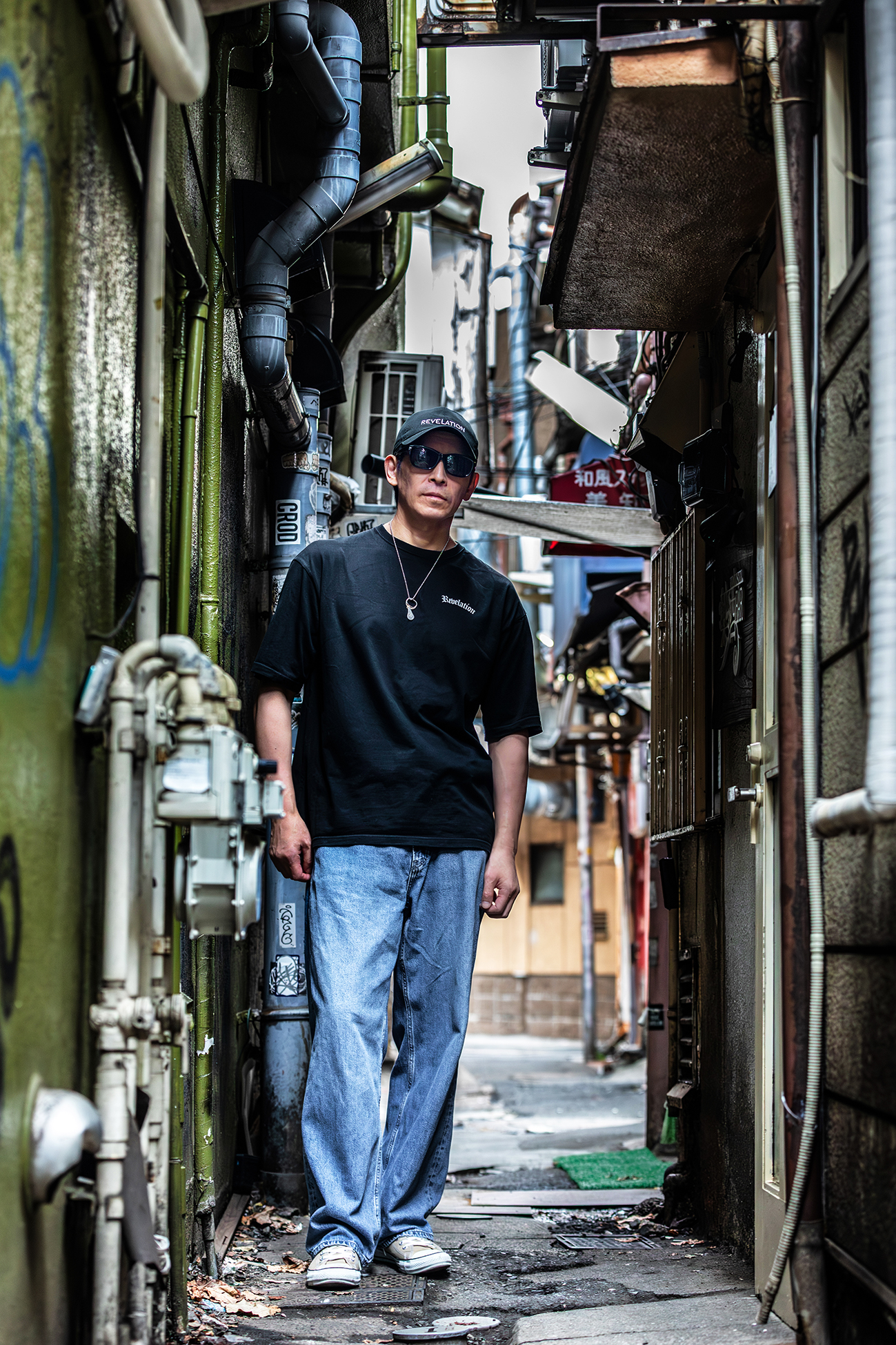
——Your professional debut as a drummer was when you joined THE MAD CAPSULE MARKETS. How do you remember that time? How did you get involved?
Motokatsu: Yes, that’s right! Before THE MAD CAPSULE MARKETS, the members had another band called BERRY. Their drummer ended up getting married, started working, and decided to quit to live a normal life far away from music. Around that time, my girlfriend happened to know the band. She was a friend of theirs. She told me that her friends were looking for a drummer. She told me that the band was great and that I should give it a try. At the time, I was also searching for the right band to join. So, I went down to Yokohama where the band was based. The first jam session told me everything: “These are the guys.” It clicked right away. And it turned out they felt the same way about me. From that moment, I was in. Until then I had always lived in Tokyo, but I was so certain that this was my band that I immediately moved to Yokohama. It felt like the start of a new chapter.
——Wow! Sometimes it just clicks like that.
Looking back, what kind of period was your time in THE MAD CAPSULE MARKETS?
Motokatsu: We were together for about six years, and honestly, it built everything for me as a musician — both mentally and technically. We rehearsed for hours every single day, wrote songs as a band every single day, pushed each other constantly. It was intense. The live shows were pure joy. Recording, on the other hand, could be grueling. You’d spend so long listening to the same tracks that you’d reach a point where you didn’t even want to hear them anymore. Sometimes I wouldn’t go back and listen for years after a release. But the most important thing was meeting those members. They weren’t just bandmates — they were close friends, yet also people I deeply respected for their work. We challenged each other, trusted each other completely, and grew side by side. That process of mutual growth… it’s something rare, and it left an unforgettable mark on me.
——That sound like a unique opportunity and experience. After the band ended, you began collaborating widely.
Motokatsu: Yes but, for a while I didn’t do much. I wasn’t very interested in anything outside of MAD. But at the time, we felt there was nothing left to do. There’d been incidents before, like in any relationship. We parted ways because we felt like we’d done it all. Around that time an overseas debut was set, which motivated us for a while, and we continued a bit. We pushed through but we felt like the band was coming to an end creatively speaking.
——Creatively speaking, did you feel that MAD CAPSULE MARKETS were ahead of their time, genre-wise?
Motokatsu: Looking back, yes — in some ways. We were mixing rap and metal before the word “nu-metal” even existed. At the time, I honestly worried we might have been too early. But when we played overseas, people were shocked by what we were doing — that combination of electronic elements with heavy rock. Back then, no one else was really doing it. Later on, bands like Rage Against the Machine appeared, and now that kind of hybrid sound feels normal. But in those years, it was something new and unexpected. For us, though, it wasn’t about trying to be ahead of the curve — it was just natural. I personally liked electronic and techno, and our bassist was into it too. So those sounds naturally crept into our writing. We even experimented with drum’n’bass-style rhythms on top of heavy riffs. It wasn’t a strategy; it was simply what excited us at the time.
——That’s why MAD has become an iconic band.
In 2006 you started rally with HISASHI and TERU from GLAY. MAD and GLAY have such different images—were you aiming for something “lighter”?
Motokatsu: Not really. I mean, that’s not something I was aiming for. The band, rally, actually started for a BUCK-TICK event, so there wasn’t any big concept behind it. HISASHI had been a huge MAD fan ever since his days in Hokkaidō. After GLAY debuted, we got to know each other better, hung out, and went to each other’s shows, so the connection was already there. The band itself was just for fun — basically a cover band. We played BUCK-TICK, The Damned, that kind of stuff. It wasn’t about creating something lighter or different, it was more like a celebration with friends
——In the nineties you participated in a big project again, SCHAFT, with Imai (BUCK-TICK) and Fuji (Soft Ballet). Do you remember that time?
Motokatsu: Yes. I still remember how it began. We played an event together with Soft Ballet, and after the show, Fuji came up to me and asked if I’d like to join a new unit he and Imai were starting. That was the beginning of SCHAFT. I’ve always thought Imai was a very cool guitarist. His sound had such a unique atmosphere and a powerful individuality—you could recognize it instantly. That kind of distinct voice on the guitar left a strong impression on me. Fuji struck me as incredibly stoic when it came to music. During rehearsals, he was always the first one to arrive at the studio, long before anyone else. He’d dive straight into working on the sync machines and fine-tuning the sounds without taking breaks. Watching that kind of dedication really impressed me and taught me something about discipline.
——What was it like to work with Raymond Watts?
Motokatsu: First of all, his height surprised me (laughs)! Then there was his voice—thick, powerful, overwhelming in its volume and presence. On stage, his performances were everything you would expect from him: commanding and magnetic. But off stage, he was surprisingly gentle, soft-spoken, and kind. I love him very much as a person, he is a true gentleman.
——Yes indeed.
What stands out as the best memory from that time?
Motokatsu: For me, the most special thing was that each of us joined SCHAFT while we were at the peak of our own respective bands. To come together at that moment and create something new, it was an incredible opportunity. Another highlight was performing live with full synchronization equipment. That was my very first time experiencing that approach, and it was stimulating and fresh. Looking back, I think those SCHAFT experiences had a direct influence on the musical direction of THE MAD CAPSULE MARKETS later on.
——Oh, how cool!
In 2012 you started ACE OF SPADES — again with HISASHI, this time joined by TAKAHIRO and TOKIE. Why start another band with HISASHI?
Motokatsu: Once again, it was HISASHI who invited me. I can’t say no to him — I love that guy. And the lineup was just too exciting to pass up. I already knew TOKIE well; she’s an incredible bassist. TAKAHIRO was the only one I hadn’t met before, and that made it even more intriguing. For me, ACE OF SPADES was full of firsts. We even went on TV shows like Music Station. Until then, I had always refused television appearances — I just didn’t feel it was my world. But once we actually did it, it turned out to be fun. We even ended up doing morning info shows. Compared to rally, which was more casual and event-driven, ACE OF SPADES has been a much more serious project. It’s not exactly over either. Our most recent release was in 2019, and although we haven’t toured since then, HISASHI and I still talk about making new music together. Maybe this year, maybe next. We’re working on things behind the scenes. So there’s a real chance you’ll see us play again — and when we do, I hope you’ll come.
——That’s good news!
In 2014 you started KA.F.KA with ISSAY, Ken Morioka, Masami Tsuchiya, and KenKen, later joined by Koji Ueno. What was the concept of that band for you?
Motokatsu: For me, KA.F.KA was very much Tsuchiya’s world — a dark, atmospheric vision, with ISSAY’s voice at the center. It carried the same aura I remembered from listening to British new-wave records back in junior high, so stepping into it felt strangely natural. The whole project had a certain inevitability, like it was meant to happen. The way I got invited was unusual. At first, Ken-chan (Ken Morioka) called me and said, “Tsuchiya wants to get in touch with you.” But he didn’t explain why — he didn’t say anything about a band, just that Tsuchiya wanted to talk. Honestly, I was confused, even a little scared. I kept thinking, “Why would Tsuchiya want to contact me? What for?” So, I hesitated to respond. Eventually, Tsuchiya himself reached out and said, “We’re putting together a new band. Do you want to join?” And immediately I said yes. By that point, I already knew ISSAY, KenKen, and of course Ken-chan, so it felt less like stepping into something new and more like joining a circle of old friends. That was the real beginning of KA.F.KA for me. I had even played on two tracks for ISSAY’s solo album decades earlier. At that time, we lived in the same neighborhood, so we would often meet. So when Tsuchiya finally extended the invitation, there was no hesitation at all — I was ready.
——They all have big creative personalities. How was it like to work with each of them?
Motokatsu: ISSAY was calm, gentle — almost like an older brother to me. Even when we drank together, he never got angry, never raised his voice. He was steady, warm, kind. I always felt safe around him, and I always looked forward to working with him. With ISSAY, I never worried. He was a gentleman.
Ken-chan (Ken Morioka) and I went way back. When I debuted with Victor in 1991, we actually shared the same director, so we knew each other from those days. He’d sometimes come to watch my shows. I always thought he was so cool. His stage outfits were wild, but in a way that made sense for him — he had that aura, that individuality that couldn’t be copied. Even though he was older than me, I treated him almost like a younger brother. There was something lovable about him, a softness. He was one of those rare, precious talents who simply shine on stage.
Masami Tsuchiya was very strict when it came to music. In rehearsals, you could actually see Ken-chan get tense under his direction. Part of my role became looking after him afterward, saying, “Don’t worry, you did fine.” Tsuchiya once told me my sound was too loud, so I moved my entire kit to the far corner of the studio just to balance things out. But outside of rehearsal, he was a different person — incredibly kind and endlessly talkative. Especially when music was playing, he wouldn’t stop. His stories were full of insight, and I always felt they were valuable, things you couldn’t hear from anyone else.
——Last year, we interviewed Masami Tsuchiya and it has become VMJ longest interview ever conducted so far. He’s a real story-teller.
Motokatsu: Yes, exactly (laughs). He’s very talkative especially when it comes to art and music.
——How about KenKen and Koji Ueno?
Motokatsu: As for KenKen, he’s best known as the bassist of RIZE and the younger brother of drummer Kaneko Nobuaki. Together with Nobuaki and their vocalist JESSE, he was a huge MAD fan. At one show, KenKen even brought a guitar backstage to have it signed (laughs). Koji Ueno and I are from the same generation, so we’d mostly see each other at festivals. We had mutual friends and gradually became close — drinking together, talking about music endlessly, and eventually playing in bands and sessions side by side. When KA.F.KA went on pause, I introduced Koji to the band, and they got along immediately. He was a perfect fit. Looking back, I think KA.F.KA was a really great band. It’s such a shame it had to part ways, but I still treasure that time.
——Speaking of ISSAY, you recently played on DER ZIBET’s new and final album, KUTEN〜Period. How did that come about?
Motokatsu: Yes, it was a real honor. The process itself was very smooth — I recorded about six or seven songs. It started when guitarist Hikaru reached out and said, “Would you be willing to record drums for this?” Of course I immediately said yes. What struck me was how strong the material already was. Even at the demo stage, the recordings were so high-quality that I honestly thought Hikaru could have released them as they were. But they wanted live drums to bring that extra dimension, so I went into the studio and tracked them. Up until then, I hadn’t really listened deeply to DER ZIBET. But once I was invited, I went back and listened properly, and I was amazed — such great songs. It made me think, I wish I’d had the chance to work with them much earlier. To be part of their last album, especially after ISSAY’s passing, felt deeply meaningful. I’m grateful I could be a part of it.
——What kind of album did it become? Any favorite track?
Motokatsu: I’ve listened to the whole thing—every track is excellent. Favorite track is Hachigatsu ha Aoi Maboroshi. There were moments in the studio when I felt tears welling up. ISSAY’s voice had a gentle warmth, and the lyrics landed hard. There’s a line about a cat by the window—he loved his cat—and that image kept rising as I played. That track became my favorite. Since he passed, those words hit differently. They carry a weight I can’t shake.
——It sounds like an special song. Will you you play the song on October 1st?
Motokatsu: No unfortunately. At the October 1 show, the set is mostly older DER ZIBET songs, almost like a best-of. We’ll only do one from the new record. The songs are difficult, so learning them is intense—but they’re all really good. Compared to the previous show, we’ve added about three more songs.
——I’m sure it’s going to be a great show.
You debuted in 1990. Looking back across 35 years, which periods or collaborations felt the most fulfilling?
Motokatsu: First would be my indies era, back in my early twenties. With MAD, we were writing new songs every single day, tossing ideas back and forth, creating together nonstop. It was pure joy, nothing else compares. We released an indie record called Humanity, and even after our major debut, we’d look back and say, “That indies record was really something.” We put out our first and second major albums, but in our hearts, those indies songs still stood out. Another huge highlight was when MAD got traction. It really started blending digital and electronic elements with heavy rock. That mix became central to our sound. It felt like we were breaking out of the frame of Japanese rock. Suddenly, it seemed like we could stand on a global stage. I’ll never forget getting a five-star review in Kerrang! in the UK, or when Jack Osbourne (Ozzy’s son) said he loved us. We played Ozzfest twice, and he told us, “You guys belong on the main stage.” We couldn’t believe it. I thought, “Really? Us?” For me, it was the realization of a dream I’d had since the early ’90s: to play overseas. For years nothing seemed to click, but then everything lined up—the sound, the reception, the opportunity. That’s when Chris Blackwell, the legendary founder of Island Records who helped launch Bob Marley, showed interest. He even came to Japan himself and said, “Let’s sign.” It was surreal, but we said yes. And from there, we could finally work abroad for real. That was a massive turning point.
Another big turning point came about four years after debut, when I took part in SCHAFT. It was the first time I used in-ears on stage—totally new for me, and it changed how I approached live sound. We talked about i before but working with Raymond Watts was super cool. His voice was unbelievable. At first I thought maybe it was on tape, like he wasn’t actually singing and they were running the record track—but no, he was really singing that powerfully. It was my first time working with a foreign artist like that. I remember thinking, This is a different level. The man is also 2 meters tall. He’s one of a kind. I really like that man (laughs).
——Raymond is genuinely kind and always full of fascinating stories and ideas.
You’ve played with so many artists across genres. How would you describe the experience of playing with SUGIZO?
Motokatsu: The projects I joined with SUGIZO leaned strongly toward the techno and electronic side. That kind of music demands absolute precision—especially keeping a steady four-on-the-floor beat without letting it drift. For me, that’s actually where I feel most at home. It was strict in the sense that you couldn’t afford to waver, but in the best way—it sharpened me. And SUGIZO’s music is really cool, very creative, and he’s constantly exploring different directions. Playing with him was always exciting, and I enjoyed it a lot.
——Where do you feel most yourself genre-wise?
Motokatsu: At the core, it always comes back to THE MAD CAPSULE MARKETS. That band really built the foundation of who I am as a drummer and a musician. It’s the base of everything. The mix of heavy rock with digital and electronic elements felt natural to me, and that sound shaped my identity. At the same time, the techno and electronic direction I explored with SUGIZO’s solo projects also sits very close to what I love. That steady pulse, the precision, the layering of machine-like sounds with human energy, it really resonates with me. And when I think about it, there’s a direct line back to my childhood, listening to Yellow Magic Orchestra. YMO was the first band that shocked me and made me want to play drums, so in a way, everything I’ve done—MAD’s hybrid style, SUGIZO’s techno projects—feels connected to those early influences. So, while I’ve played across many genres, from punk to hardcore to more experimental things, the space where I feel most myself is in that intersection: powerful rhythm with an electronic edge, rooted in what first inspired me.
——That makes sense.
In 2023, you joined GASTUNK—a return to a harder sound. Even though it ended in a difficult way, did you enjoy anything about being on stage with them?
Motokatsu: Difficult way… Yeah (laughs)! Anything enjoyable? Honestly, no. Not really. Even setting aside the money issues people talk about, the time was hard. I’d known those guys for nearly ten years as friends, and I joined because they asked me to help. But musically, it was totally different from what I’ve pursued—different mentality, different standards. I often thought, Is this really okay like this? To be blunt, I didn’t want to play at that level. If I do hardcore, I want it at a much higher quality. This isn’t an insult—there are many fans who love GASTUNK, and I respect that—but for me, musically, it wasn’t right. I am going to be very honest but I have never found anything enjoyable with GASTUNK.
——No worries, we love honest people. Please be as honest as possible! Let’s talk about training, a hobby of yours that you’ve connected to drumming for years.
Motokatsu: I’ve always liked moving—baseball, karate, anything physical. Around twenty I got serious about training, though even as a student I was already doing workouts at home. From the start I believed: if you don’t build physical strength, you can’t survive on big stages or compete globally. Back then some senior drummers would tease me, saying, “Why bother lifting weights? Drumming isn’t about brute force.” And I understand that point, but the reality is different. When you watch overseas artists up close, the sheer sound pressure they generate is incredible. You hear it on records too. It’s not just about turning up the PA—it’s about the physical power and control behind each stroke. When your body is strong overall, you don’t need to play at 100% to produce a solid, commanding sound. Drums are a physical instrument at their core. Of course, you can play softly and let the front-of-house engineer boost the volume, but that’s not the same. The acoustic energy needs to come from you. On stage—especially overseas—you can feel that difference. Even young amateurs playing small clubs should aim for that kind of authentic live power. The other benefit is longevity. I want to keep playing as long as possible. Look at AC/DC—still rocking in their seventies and eighties. They can do it because they’ve taken care of their bodies. That’s always inspired me.
——That makes sense. How often do you train these days?
Motokatsu: It used to be six or seven days a week. These days it’s about three times a week. But I still love it. Sometimes I’ll notice hours have passed—I’ll look up and realize I’ve been training for four straight hours. It never feels like a chore. I also surf when I can, sometimes alone, sometimes with friends on weekends. It’s all part of keeping the body active and ready.
——You put a lot of value on training, precision, and pushing yourself. What has that balance taught you?
Motokatsu: When your physical base is solid, it brings mental ease too. You don’t just get stronger—you gain space in your head. You can think more clearly, make better decisions, and stay calm even when things get tough. And of course, it means you can keep playing. I’ve seen incredible drummers who had to stop, not because their passion faded, but because their bodies simply couldn’t keep up anymore. That’s heartbreaking. I don’t want to end up like that. For me, training isn’t just about the muscles—it’s about ensuring I can play drums for as long as I live. And honestly, I keep at it because I enjoy it. It’s part of my life rhythm, just like drumming itself.
——Can only agree with you. I like training too for these reasons you mentioned.
If you could talk to your younger self—the kid just starting drums—what would you say?
Motokatsu: I I’d tell him: practice fast tempos while you’re young. Especially double-pedal. If you don’t get it into your body early, you won’t be able to later. Even now, I still can’t play with double pedals the way I’d like. I can’t play Slayer nor SLIPKNOT—those crazy speeds and machine-gun kicks—but I can’t play that stuff because I never practiced it back then. We even played a festival with SLIPKNOT once. We hung out, talked—they were cool guys. Met Joey Jordison (SLIPKNOT). I told him I couldn’t play that fast, and he just laughed and said, “Yeah—you just need practice.” What struck me most was how much they practiced. The level they reach doesn’t come out of nowhere. It’s discipline, every day. So yeah—if I could go back, I’d tell myself: Don’t slack on the fast stuff. Put in the work while your body is still young.
——What advice would you give young musicians about building a meaningful life in music?
Motokatsu: I don’t have fancy advice. Do the music you believe in. Don’t worry about people’s eyes. At the beginning we sometimes played to zero or two people, especially in regional shows. But we believed in our music, and it was fun even for two people—because we were doing our music. Keep going. You never know what will happen—there’s luck and there are encounters. If I hadn’t met the right members—or even if I hadn’t had that girlfriend who connected me to a band—I might be working a normal job and playing drums as a hobby. So keep going.
——That’s a nice piece of advice.
Looking ahead—as a musician and as a person—what do you still want to challenge yourself with?
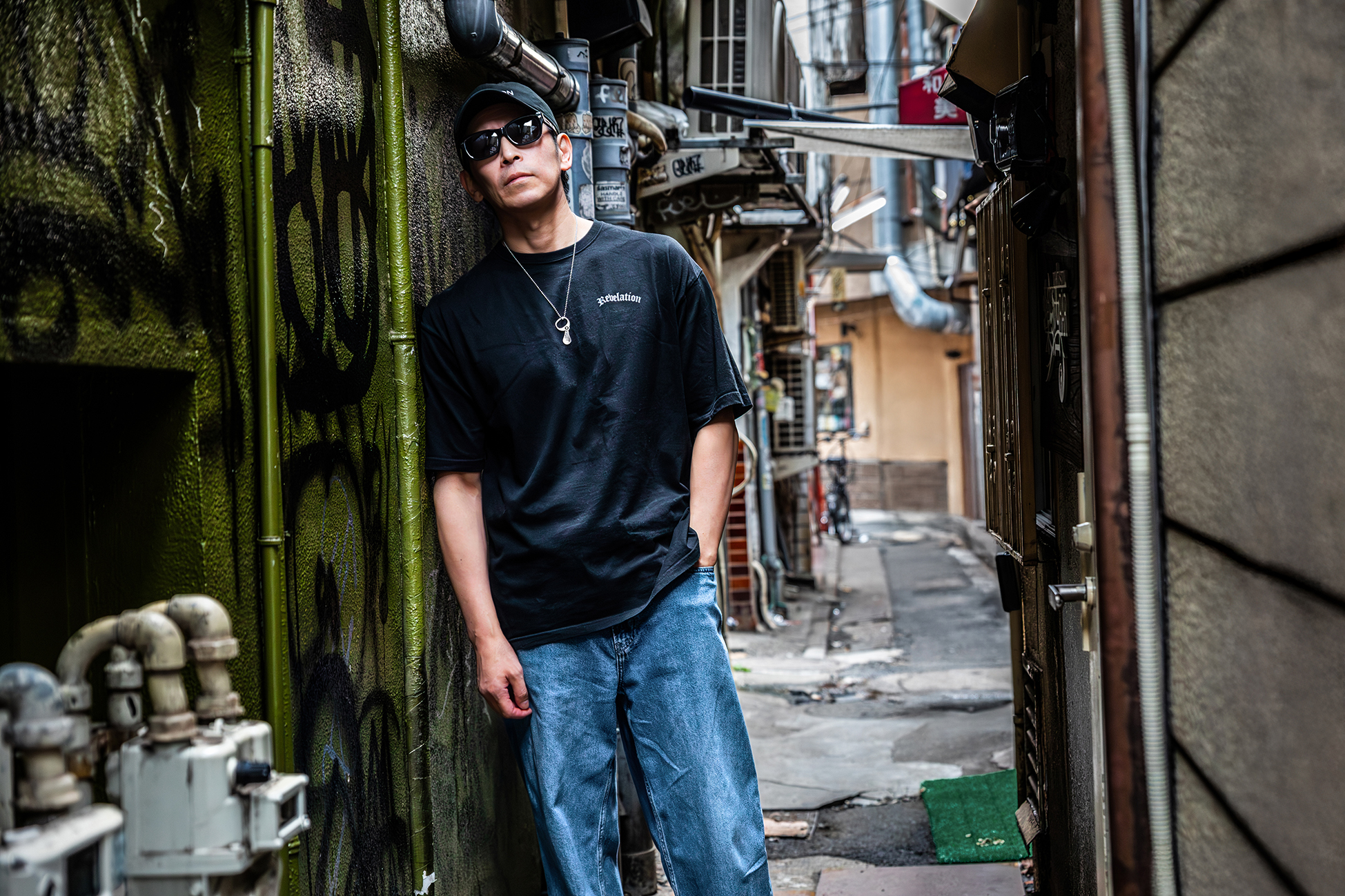
Motokatsu: I’ll always keep drumming—that’s the foundation of who I am. But outside of music, I’ve long been passionate about fashion. I want to keep growing my own brand, Revelation. The idea actually came to me in a dream—the name just appeared, and it felt right immediately. With the brand, I don’t want to be tied down by rigid schedules or seasonal drops. I’d rather design at my own pace—pieces I personally want to wear, carry, or even items connected to drumming. When inspiration comes, I create. That way, each release feels natural, not forced. I already have an online site. You can technically order now, but I’d suggest waiting a little—new items are about to drop. Everything will be announced through my socials, so people will know when the timing is right. For me, Revelation isn’t just about clothing; it’s about expressing another side of creativity—something personal, born from the same drive that keeps me behind the drums.
——That’s a nice brand name. And on a personal note?
Motokatsu: I actually became a grandfather recently. That changed my perspective a lot. One of my biggest motivations now is to keep playing long enough for my grandchild to truly understand music—to be able to come see me live and feel what I do. To reach that point, I have to take care of myself: avoid injuries, keep my body in shape, and stay healthy. For me, training and sports aren’t about looks at all—they’re about staying strong enough to keep doing what I love, fully and freely, for as long as possible.
——Congratulations on becoming a granddad!
Thank you so much for today. And for your honesty (smiles).
Motokatsu: Thank you. I had a good time remembering all those moments and memories. Thank you for the opportunity. See you all at DER ZIBET’s live on October 1!
__________________
Mandah FRÉNOT
(c) VMJ
⩺ OFFICIAL INSTAGRAM | HERE
⩺ OFFICIAL X (ex-TWITTER) | HERE